


The beige box. The 512×342 screen. The soft grind of a floppy finding its place. Some ideas don’t arrive as ideas. They show up as artifacts. This one had a name: Megaroids.
If you were around the early Macintosh days, you might remember when software occasionally came with source code—printed, meant to be typed, meant to be understood. Megamax C did exactly that. In my dorm room at Massachusetts Institute of Technology, I typed Megaroids in line by line. No shortcuts, no safety net—just patience and curiosity. When it finally ran, something shifted. Not because the game was remarkable—though, to be fair, for its time it absolutely was—but because it worked at all. That was over forty years ago, and like most things from that era, the hardware, the disks, and the paper itself have long since disappeared.
The Internet Remembers Poorly
We like to think the internet never forgets. What’s more surprising is that it remembers things that happened before it even existed—and even then, only partially.
Megaroids resurfaced in Programming C on the Macintosh by Terry A. Ward, which should have been the end of the search. Instead, it became the beginning of a different kind of problem. The source wasn’t clean. The hex data had holes. OCR, which performs reasonably well on prose, quietly falls apart when faced with dense hexadecimal blocks where a single incorrect digit breaks everything.
So I went looking sideways. I found a later binary, a version ported to Lightspeed C, and ran it through Mini vMac. Boot, load, wait—and there it was. The sound, the motion, the feel. Not memory or approximation, but something much closer to the original experience.
The reaction wasn’t dramatic. It didn’t need to be.
Thank God for the people who keep this stuff alive.
Not a Translation
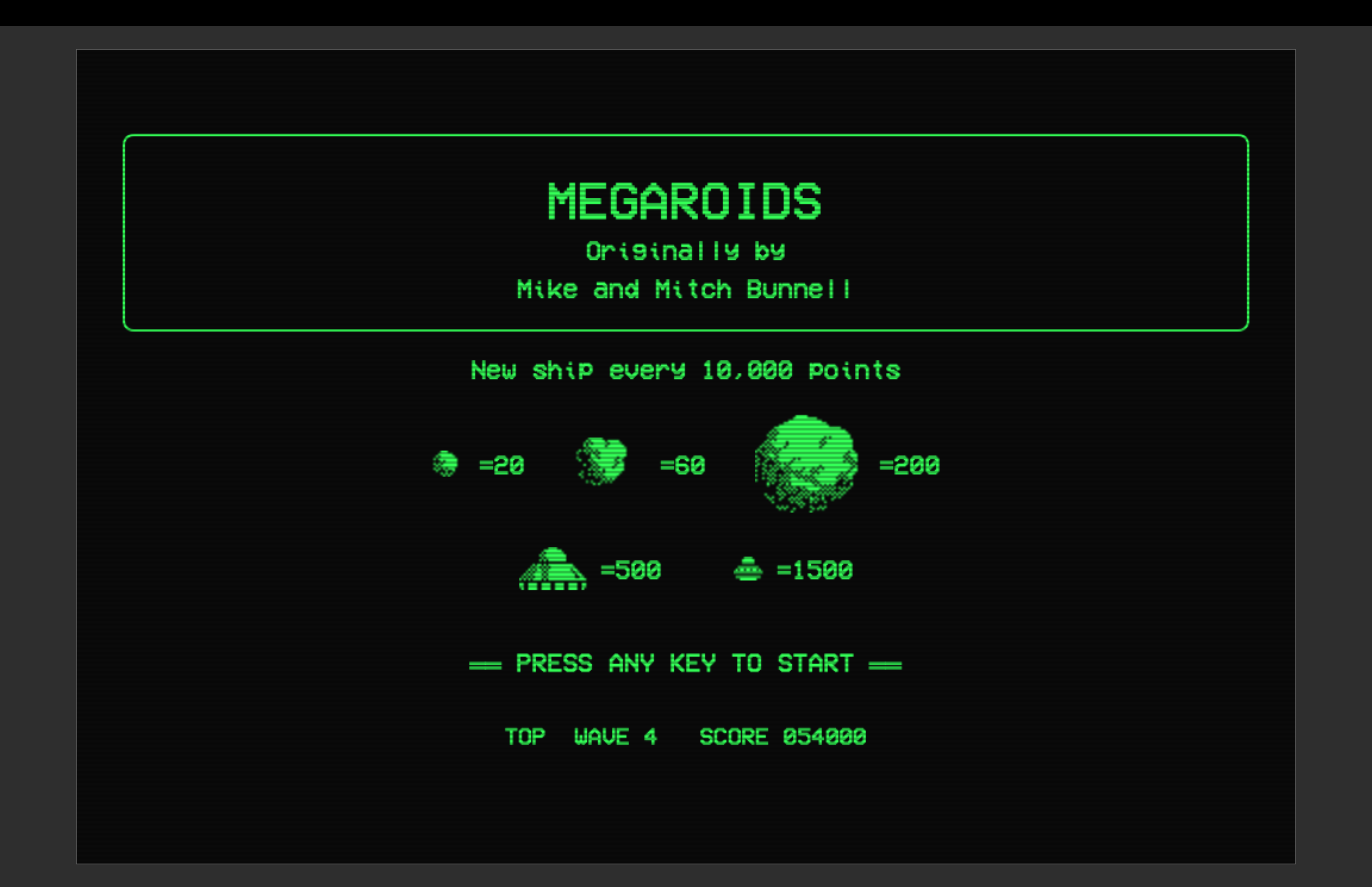
At that point, the question shifted from curiosity to possibility: could this run again here, outside of emulation? Not preserved behind glass, but rebuilt in a way that made sense today.
The first problem was trust. The book wasn’t reliable, the scans weren’t reliable, and even the binary was just an artifact rather than a blueprint. So I created a single anchor—Megaroids.c—a reconstructed source of truth assembled from fragments, cross-checks, and a fair amount of trial and error. It’s worth noting that this file was never meant to compile. Megamax C is long gone, and that wasn’t the goal. The goal was something far more pragmatic: to create a version of the code that was complete enough for an AI to read, reason about, and work through—even if pieces were still missing.
From there, I brought in Claude—not as a novelty or a shortcut, but as something closer to an expert with alien patience.
What followed wasn’t a clean translation from C to Swift. Some parts mapped directly, but large portions did not. It reminded me of something I wrote in Odd Books, about a novel written entirely without the letter “e,” and how its translators didn’t simply convert the language—they preserved the constraint. English without “e” became Spanish without “a,” Russian without “o.” The story survived, but only because each version honored its own impossible rule set.
That’s what this felt like. Some parts of Megaroids translated cleanly, like English to Spanish. Others required something more interpretive—reconstructing intent across entirely different constraints. Sound routines tied to hardware that no longer exists had to be reimagined. Timing assumptions built for a completely different machine had to be approximated. Even the user interface had to be negotiated, because what made sense on a compact Mac in 1985 doesn’t carry forward without adjustment.
This wasn’t about asking what the code did. It was about asking what the experience allowed, and then finding a way to express that again in a world where the original rules no longer apply.
The Slow Part
Ironically, the port itself didn’t take that long compared to everything surrounding it. Sorting out the hex data took longer than the actual translation, and the overall process stretched across about a month. But even that description is misleading, because most of that time wasn’t continuous work. It was pauses—waiting for Claude limits to reset, stepping away, and then returning days later with two small fixes and one more idea.
Progress didn’t come in large, visible steps. It came in returns. A week later, a small tweak. Another week, a sound behaving more like it should. Another, a subtle adjustment that made everything feel just a little closer to right. The work itself wasn’t heavy, but it was persistent—and strangely enjoyable in a way that only this kind of slow polish can be.
The Moment
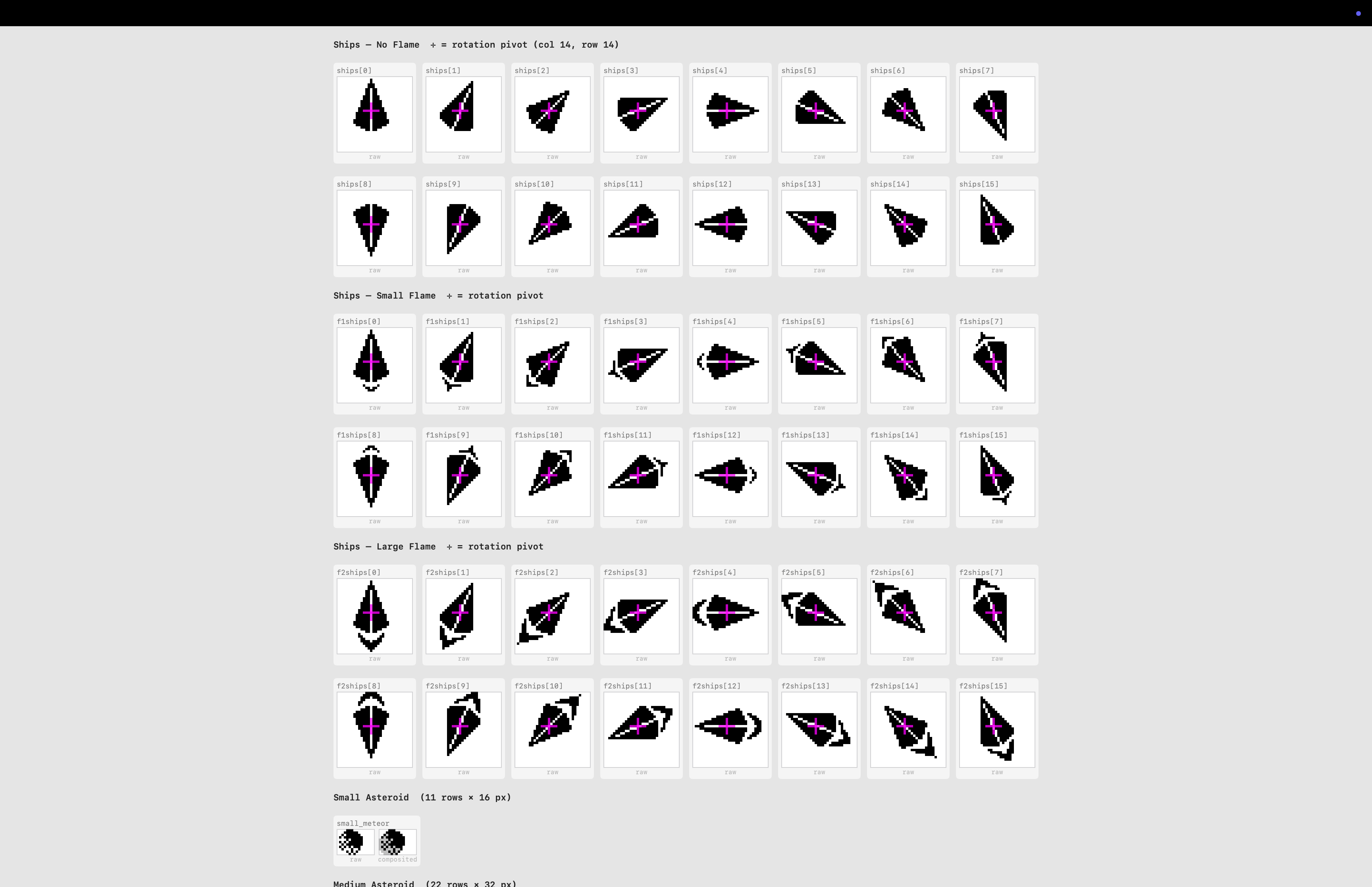
The defining moment didn’t come when the app compiled or even when the game launched. It came with the debug screen. Every sprite was laid out in front of me—imperfect, visible, and completely honest. For the first time, it was obvious which ones needed work, and more importantly, it was possible to fix them systematically.
Seeing them move correctly in the game after that—that part never gets old.
What This Was
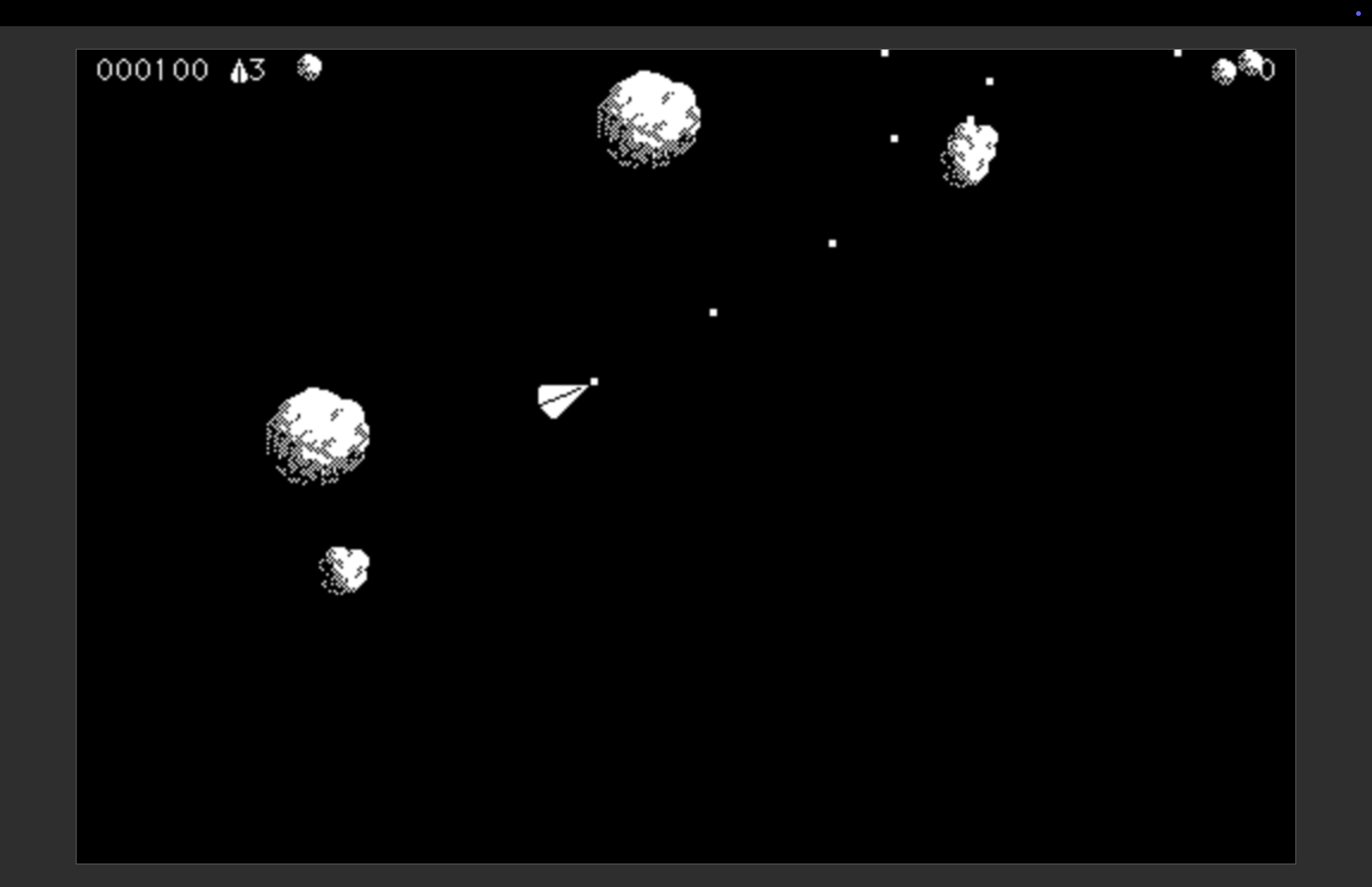
It would be easy to call this a port or a translation, but both descriptions miss something essential. What actually happened here was a reconstruction of intent across four decades—across different hardware, different assumptions, and a completely different computing environment.
The more interesting part is that this wasn’t the goal. This idea didn’t start the project; it emerged from it. After writing the Vibe Coding: When the Machine Writes Back series, there was a kind of residual effect—new ideas appearing without much prompting. This was one of them. Something from the past, made accessible again not because it was planned, but because it was suddenly possible to attempt it.
That’s the real shift. It’s not just that we can build faster. It’s that we begin to consider building things we would have dismissed outright before.
The source is here. There’s also a binary there if you just want to run it. Whether you remember Megaroids—or just remember that era—it runs again.
🌱 Seed Thought: Sometimes progress isn’t about creating something new. It’s about finally having the tools to recover what was almost lost—and realizing it was never just the code you were after

.