


A Quick Warning Before We Begin

This piece references a highly charged political moment.
Not to debate it.
Not to relitigate it.
And not to convince you of anything political.
The event is used here the same way Tony Robbins once used Martians: as a pressure test for how belief behaves when emotions run hot.
If politics shuts down your curiosity, this may be uncomfortable.
That discomfort, however, is kind of the point.
The Martian Who Stole the Wallet
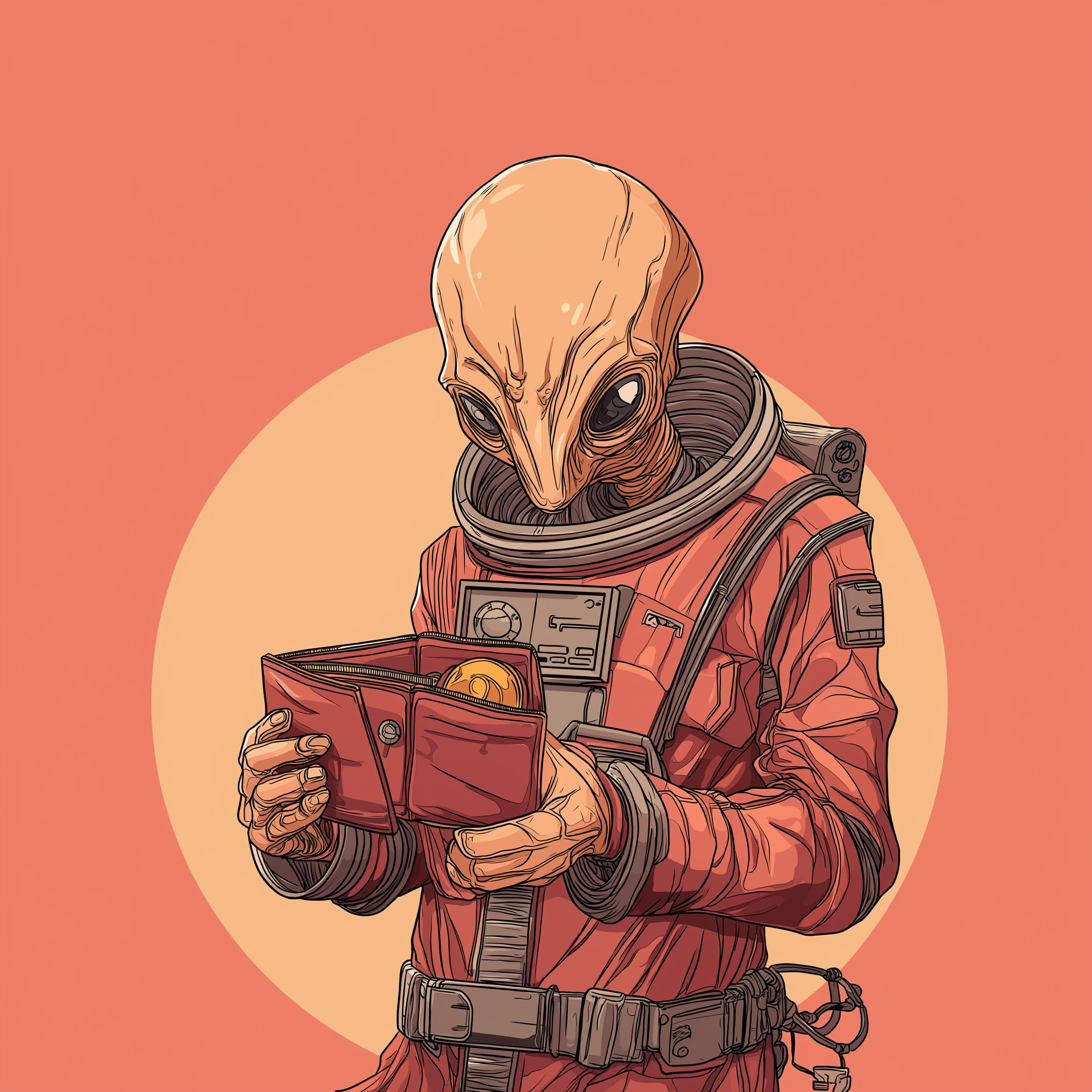
Years ago—close to three decades now—I remember hearing Tony Robbins tell a story that stuck with me far longer than most advice ever does.
You walk into a room and realize your wallet is missing.
You believe Martians steal wallets.
You look up and see a Martian in the room.
Case closed.
Except, of course, it isn’t.
Tony’s point was never about Martians. It was about what happens the moment belief replaces investigation. The mind doesn’t pause. It doesn’t ask better questions. It doesn’t widen the lens.
It locks.
Once you believe something, your brain becomes less of a detective and more of a prosecuting attorney. Evidence is no longer gathered—it’s selected.
And for a long time, that story lived quietly in the back of my head.
Until last week.
When the Room Got Loud Again

What brought the Martian back wasn’t a seminar or a book.
It was a short video posted on X by Kaizen D. Asiedu.
The political controversy he addressed doesn’t actually matter for our purposes here. What mattered was how he addressed it.
He did something that feels almost rebellious today:
He slowed down.
Instead of reacting instantly—outrage or dismissal—he paused. He explained what actually happened. He separated intent from outcome. He introduced Hanlon’s Razor: incompetence is more common than malice.
Or, as I like to say—usually when people are deep into conspiracy theories and absolutely certain they’ve uncovered some grand, hidden design:
Never underestimate the incompetence of government.
That line usually gets a laugh. But it shouldn’t.
Because incompetence doesn’t require coordination. It doesn’t require ideology. It doesn’t even require intelligence. It just requires humans. Tired ones. Rushed ones. Poorly incentivized ones. People posting sixty times in a night with a screen recorder and too little sleep.
Malice, on the other hand, is expensive. It requires intent. Intent requires effort.
Then he said something far more dangerous than any hot take:
What evidence would change your mind?
That question hit like a tuning fork, because that’s the moment you can see the Martian—or refuse to.
When “How” Becomes the Trap

I’ve written before on Seed Scapes about How You Do One Thing Is How You Do Everything. It’s one of those ideas that feels obviously true once you see it.
But there’s a warning attached to that phrase—one I didn’t fully appreciate when I first wrote it.
The danger appears when the “how” becomes a belief instead of a question.
He always does things this way.
They’re that kind of person.
People like that don’t make mistakes—they reveal themselves.
At that point, you’re no longer observing behavior.
You’re projecting motive.
And projection feels a lot like insight—right up until it isn’t.
This applies to ourselves, but it’s far more destructive when applied to others. Especially strangers. Especially enemies. Especially anyone we already “know” enough about to stop asking questions.
That’s when belief quietly replaces curiosity.
That’s when the Martian gets convicted.
The Preference We Don’t Like to Admit

Kaizen articulated something that deserves to be written on a card and taped to every screen we own:
When someone we like messes up, we assume incompetence. When someone we dislike messes up, we assume malice.
That’s not a principle. That’s a preference. And preferences are terrible tools for finding truth.
Beliefs want closure.
Truth demands patience.
One gives you emotional relief. The other asks you to sit with uncertainty a little longer. Most of us don’t fail at thinking because we’re lazy. We fail because we’re too fast.
🌱 Seed Thought: Keep searching for truth—especially when your beliefs are convinced they’ve already found it.
