


Years ago, I volunteered to crew three Tony Robbins UPW events, all in New Jersey.
The first time, I was regular crew. What struck me most was how much crewing a Tony Robbins event felt like being inside another Tony Robbins event. You were certainly exposed to parts of UPW, but you weren’t there to attend it. You were there to work.
And everybody worked.
That first experience also opened a door I hadn’t really known existed: Fire Team.
Behind the Firewalk
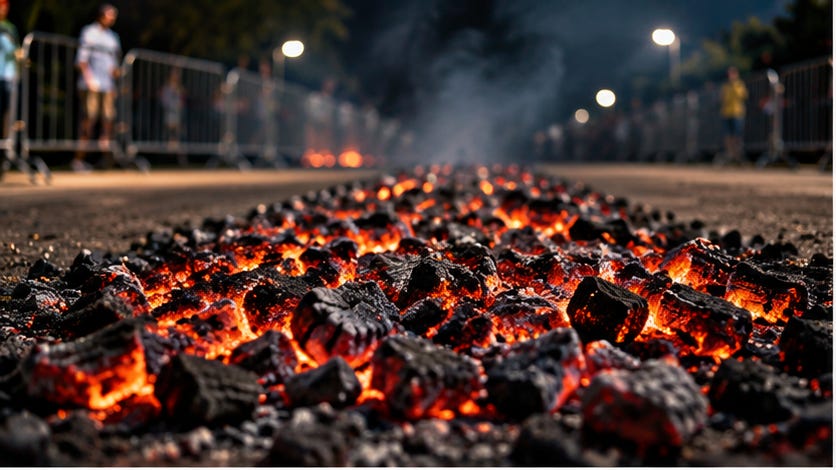
If you have ever attended UPW, one of the things you probably remember is the firewalk. Walking barefoot across glowing red-hot coals is memorable enough.
What fascinated me was everything that had to happen before anyone took that first step.
Earlier in the day, attendees were brought outside for a preview of what would happen that night. That was where I first saw the Fire Team at work. There was something almost magical about it—not the coals themselves, but the machinery behind creating the experience.
I wanted in.
When the next UPW came around, I applied specifically to the Fire Team and was accepted.
Fire Team started early. Much earlier than most of the other crew. And it finished late. Much later.
In some ways, it reminded me of roadies putting on a one-night concert. Load in. Build everything. Run the show. Tear everything down. Load out.
Except instead of amplifiers and lighting rigs, there were wheelbarrows, water lines, piles of wood, glowing coals, safety crews, fire crews, water crews—and sweepers.
Yes, sweepers.
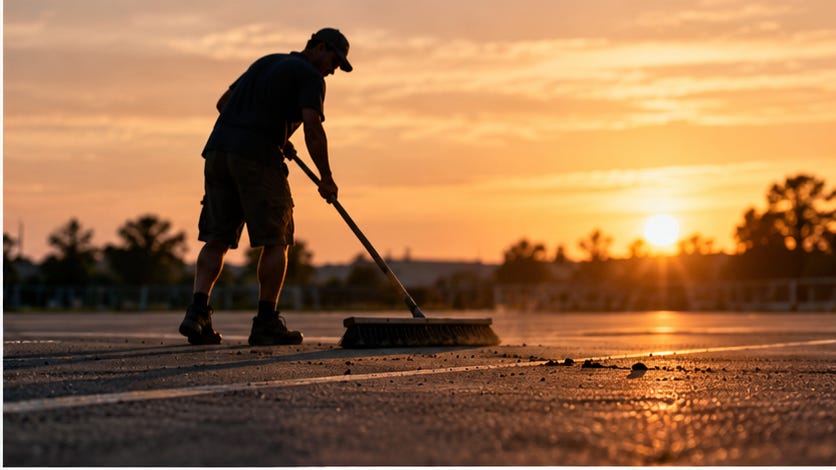
Thousands of people were eventually going to walk barefoot through a parking lot. That meant the smallest pebble mattered. So people swept. And swept. And then swept some more. One pass wasn’t enough. Neither were two.
I was assigned to water my first time. Even that became an exercise in problem solving. Whatever water connection the venue gave us had to somehow become the infrastructure we needed. Other crews assembled wheelbarrows that would eventually carry burning coals and then, hours later, took every one of them apart again.
There were hundreds of little jobs that attendees would never see. And there were a lot of hours.
The Sweepers
At least on water, my day changed. There were different problems to solve and different things to do, even though they all served the same goal.
The sweepers didn’t have much of that luxury.
Their scenery changed. Their job didn’t.
Look down. Push the broom. Move. Look down. Push the broom. Move again.
Hour after hour.
Everyone was tired. Of course we were. But it is the sweepers I remember repeating the phrase that somehow followed me out of that parking lot:
“We don’t quit when we’re tired. We quit when we’re done.”
At the time, it was probably just something people said to keep themselves moving. I doubt anyone stopped to wonder whether they were dispensing life philosophy.
I certainly didn’t.
That’s the interesting thing about some lessons. You don’t recognize them when you’re learning them. They just get attached to an experience.
Years Later
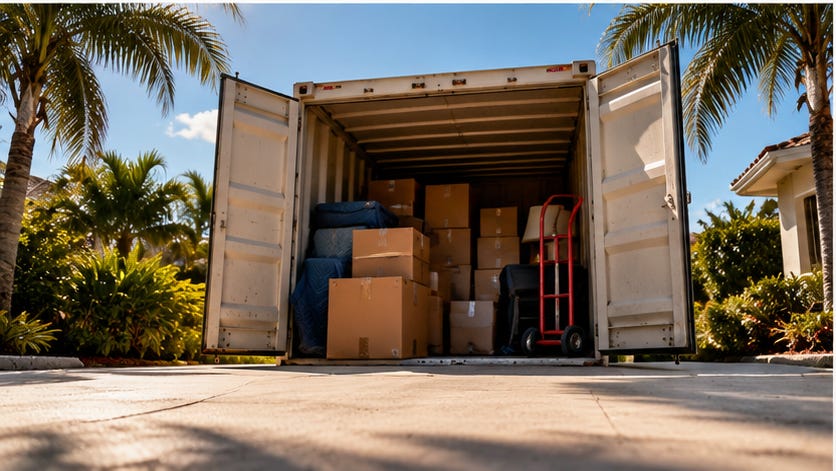
Decades later, I found myself in Florida unloading one of those moving cubes.
It was hot. It was humid. I was alone at the time, and unloading it was becoming spectacularly monotonous.
Technically, there was no emergency. I had three days before the cube was scheduled to be picked up. I could have stopped. I could have finished tomorrow. Nobody would have cared.
Except I wanted it done.
And somewhere between another box and another trip into the house, a voice from a New Jersey parking lot showed up and kept repeating for the rest of the day.
We don’t quit when we’re tired. We quit when we’re done.
So I kept going. Another box. Another piece of furniture. Another trip.
Tired wasn’t the measuring stick anymore.
Done was.
And eventually, done arrived.
What Sticks
I’m not sure a sentence like that can be transferred perfectly from one person to another.
Reading it isn’t the same as hearing it when your body is exhausted, the hour is late, and the person beside you is still pushing a broom across a parking lot that seems incapable of ever becoming clean enough.
There is physical emotion attached to my version of the words. You won’t have that.
But maybe that isn’t necessary.
Maybe all a phrase needs is somewhere to wait.
You read it once. You understand it intellectually. Perhaps you even roll your eyes at it a little. Then someday you are staring at your own version of that parking lot. Your own moving cube. Your own pile of work that would be perfectly reasonable to leave until tomorrow.
And the words come back.
Call it a mantra. Call it an inCANtation. Call it a trick we play on our own minds when the body begins negotiating with us.
Whatever it is, that day in Florida it worked.
So, many years later, I owe a thank-you to a group of Fire Team sweepers whose names I don’t remember and who had no idea they were changing a small part of my life.
They were just trying to finish the job.
Maybe that’s how some of the best lessons get taught.
🌱 Seed Thought: You rarely know which moments will follow you for life. Sometimes the lesson isn’t in the extraordinary thing everyone came to see, but in the person quietly sweeping the parking lot after everyone else has stopped looking.
