Before We Continue
If Part I was about proving something was possible, Part II is about something more unsettling: what happens when things start working before you fully understand them. This is where most people slow down—double-check, rebuild, study. That instinct doesn’t go away, but it gets challenged. Because the feedback loop tightens, and the question quietly shifts from “is this correct?” to “is this useful?”—and those are not the same thing.
The Fork in the Road (Literally)
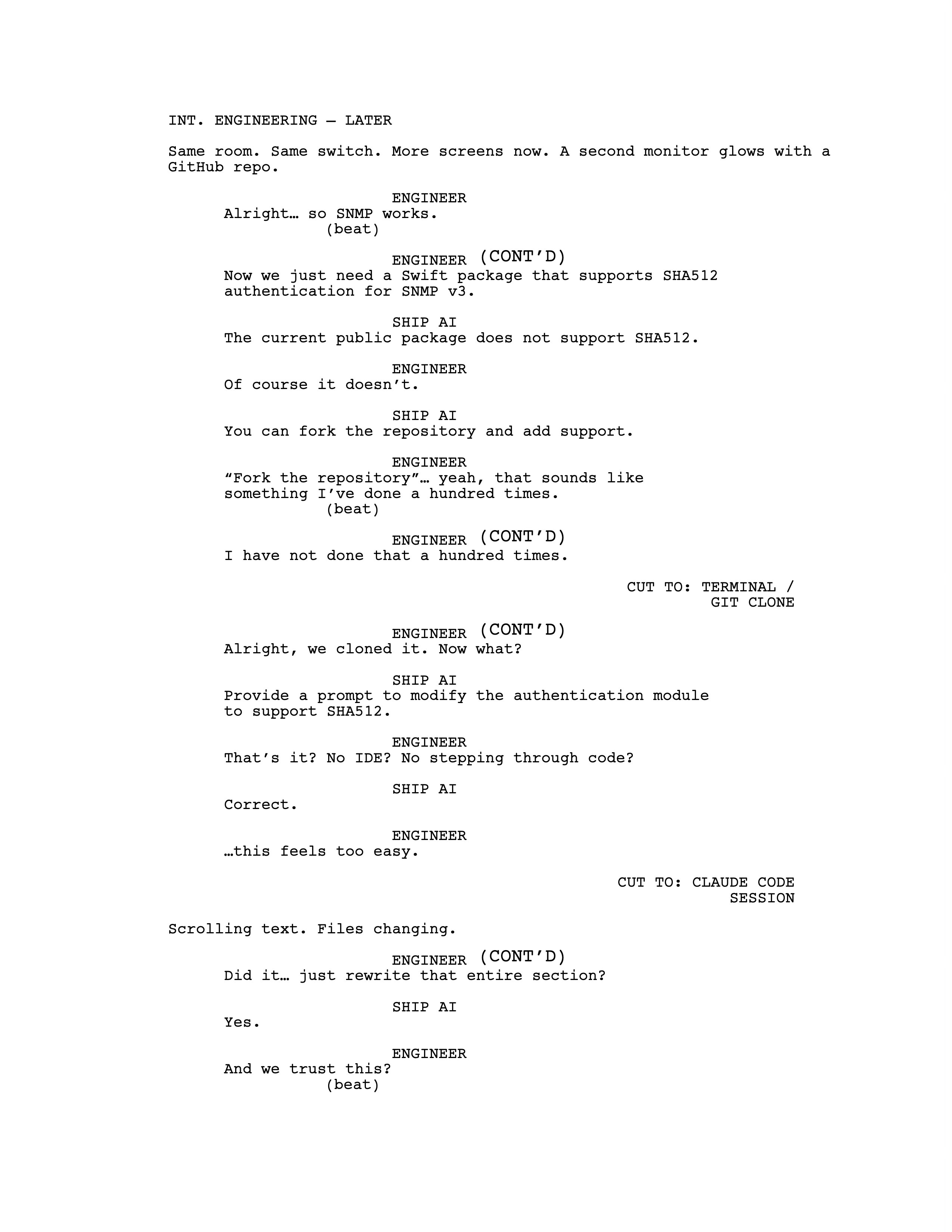
Once SHA-512 became the blocker, the problem stopped being about switches and became about infrastructure—libraries, dependencies, code you didn’t write and weren’t planning to. In another era, this is where things slow down: documentation, tracing implementations, maybe even reconsidering the approach. Instead, you forked the repository. Not because you were certain—but because it was the next move. That distinction matters.
Coding Without Coding
This is where things start to feel slightly unreal. No Xcode, no breakpoints, no stepping through logic—just clone the repo, point AI at it, describe what needs to change, wait… and then: “Done.” Was it done? You didn’t know. And that uncertainty didn’t stop you—it changed how you moved forward. Because the real friction wasn’t the code. It was everything around it.
The Unexpected Boss Fight: GitHub
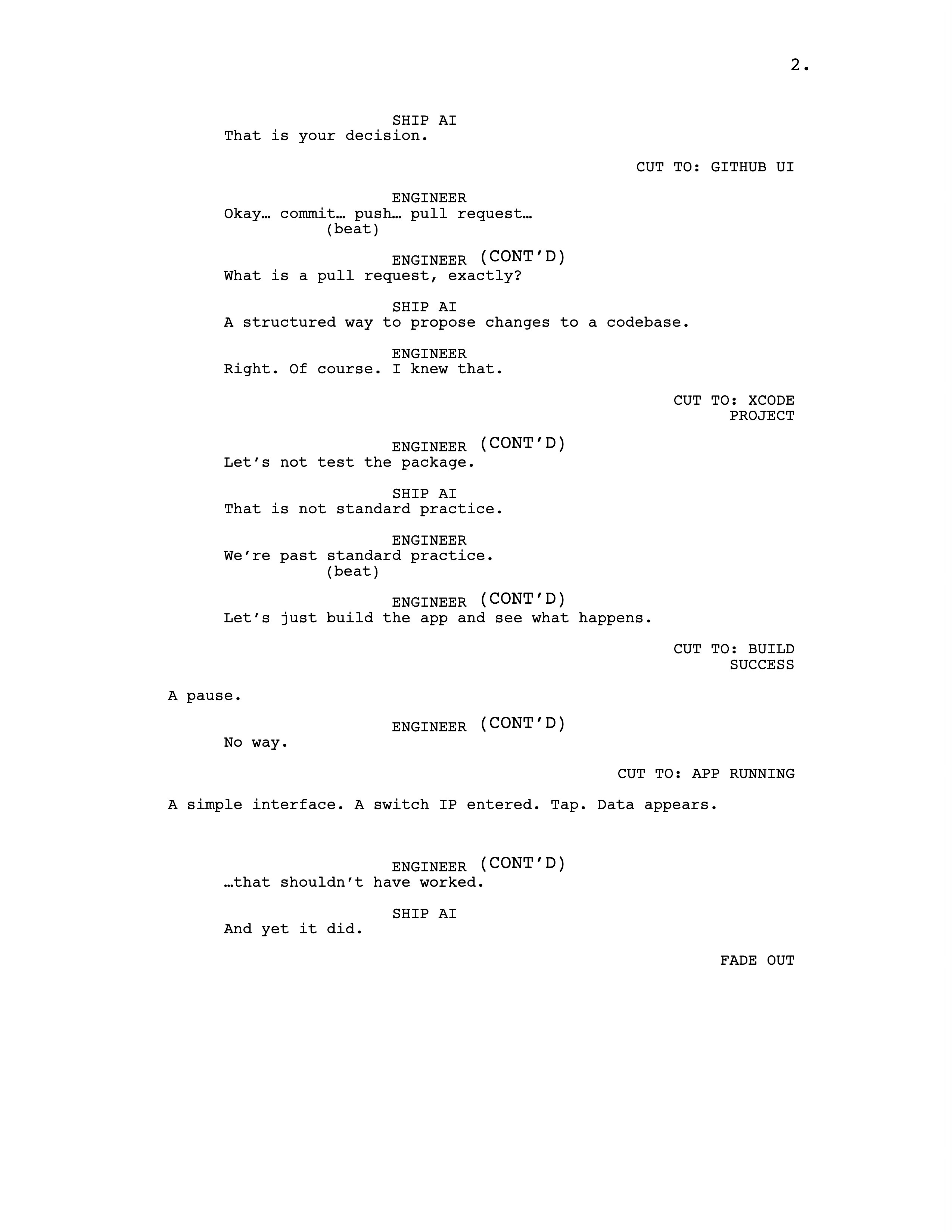
Commits, pushes, pull requests, working directories—none of it technically hard, but unfamiliar enough to slow momentum. Ironically, the most “modern” part of the process was the least assisted. AI helped rewrite cryptographic logic, but it didn’t help much when your working directory behaved in ways you didn’t expect. That contrast is telling.
Skipping the Line
Instead of isolating and testing the package properly, you moved forward anyway—built the app, added the package, tested it live. Not how engineers are trained, but exactly how momentum behaves when iteration costs drop to near zero.
The Moment It Shouldn’t Have Worked
And then it did. Not perfectly, not cleanly—but undeniably. An app talking to a switch, powered by a modified package you didn’t write. That moment doesn’t feel like success. It feels like disbelief.
Where the Friction Moved
If Part I hinted at it, Part II makes it obvious: AI doesn’t remove friction—it relocates it. Away from writing code and understanding protocols, toward tooling ecosystems, distribution pipelines, naming conflicts, provisioning profiles. You didn’t write code for hours, but you spent hours navigating everything required to ship it.
The New Loop
By now, a rhythm had formed: build quickly, observe, adjust, repeat. The cycles tightened—not because the problems got smaller, but because the distance between idea and feedback collapsed.

🌱 Seed Thought: AI doesn’t eliminate the work. It changes where the work lives—and how fast you can move through it.