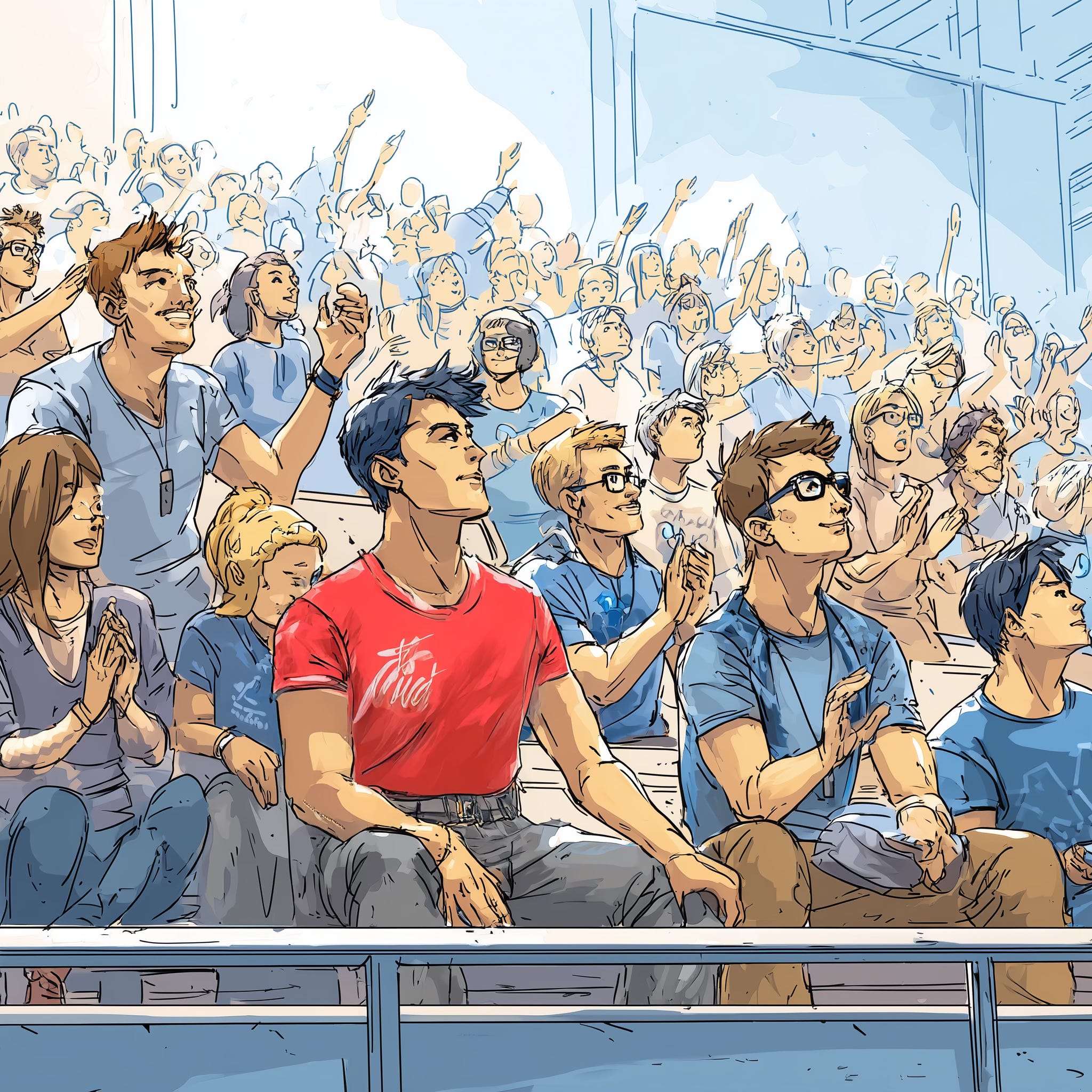
I don’t like sports.
That sentence has never felt rebellious—just accurate. I wasn’t good at them growing up, which tends to set a trajectory early. Add a suspicious absence of lingering knee stories, shoulder complaints, or sentences that begin with “it never healed right…” and I’ve made peace with the trade-off.
That said, I enjoy going to games. Any sport will do. I like the energy, the temporary agreement among strangers that this moment matters. If I understand the rules well enough to follow the flow, even better. But fandom? Loyalty? Wearing logos as identity? Not my lane.
I once won a Super Bowl pool without watching a single snap—outside, mixing smoked Old Fashioneds with friends while the serious fans shouted at the television indoors. It didn’t feel ironic. It felt normal.
Only recently did I realize it might also be explanatory.
When the Loop Isn’t Yours
The clip points to a behavioral loop—not as diagnosis or destiny, but as a pattern that reliably holds attention. Defined simply, it works like this:
Anticipation – something is about to happen (the game, the bet, the refresh)
Stimulation – the event unfolds (the play, the swing, the notification)
Emotional payoff – excitement, relief, outrage, belonging
Re-entry – the promise that it will happen again, soon
That cycle—anticipate, feel, repeat—shows up in sports, gambling, and social media because it works exceptionally well for some people.
What landed for me wasn’t whether the model was perfectly accurate. It was the realization that some of us simply never plugged into this loop through sports.
That’s not virtue. It’s not deficiency. It’s temperament.
Some people genuinely enjoy riding that rhythm—the build-up, the tension, the collective release. Others get the same neurological spark elsewhere: building something, solving something, creating something… or, in my case, standing outside making cocktails while a championship unfolds somewhere else.
Neither mode is superior. They’re just different ways attention gets captured—and rewarded.
For those of us who never became sports fans, this framing doesn’t feel accusatory. It feels clarifying.
Oh—that’s the loop I never entered.
The Typo That Breaks the Spell
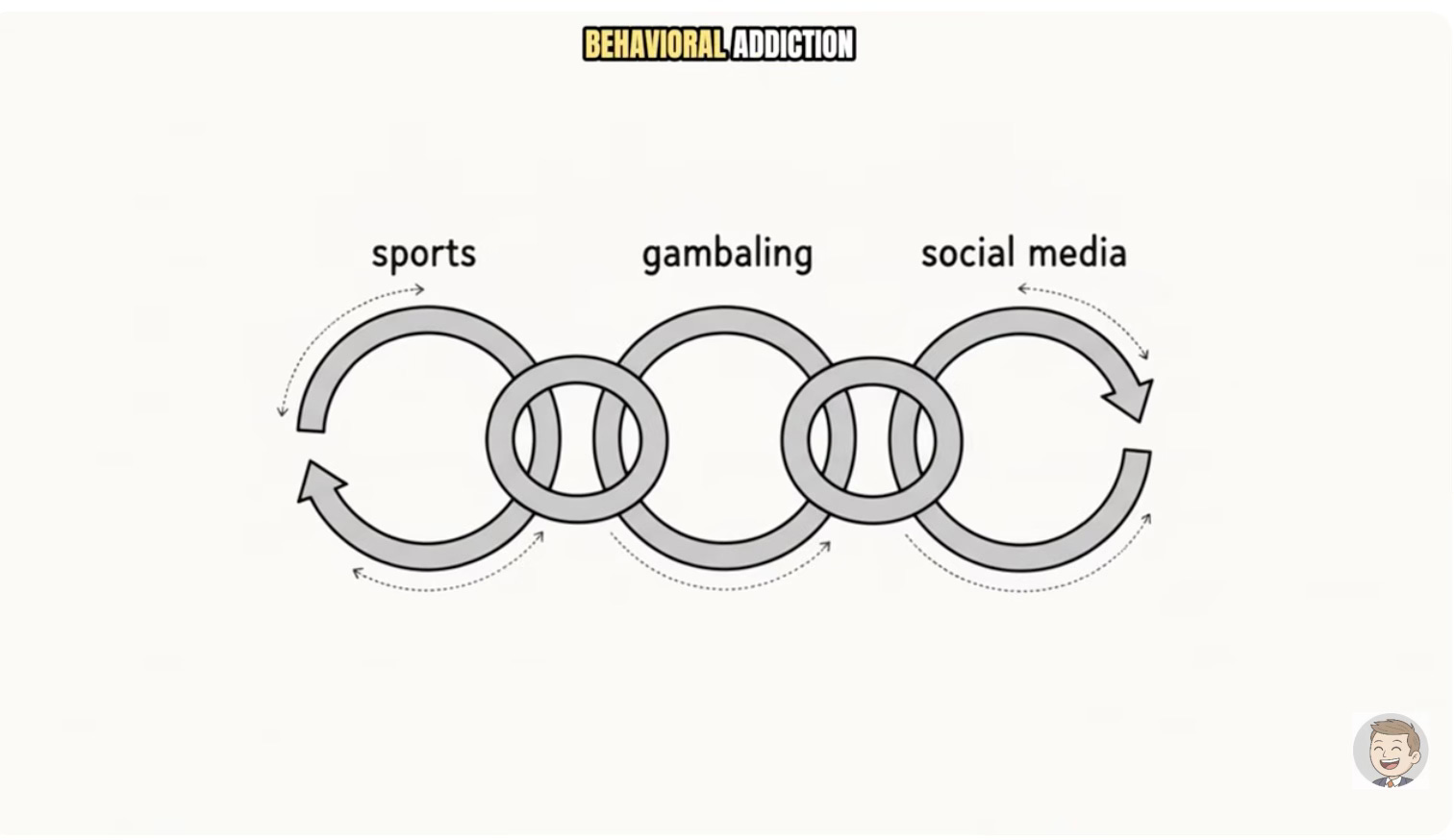
Then there was the slide.
“Gambaling.”
A typo. Small. Human. Easy to forgive.
But once you see it, you can’t unsee it.
It didn’t discredit the idea—but it punctured the spell. It reminded me that even the cleanest diagrams explaining human behavior are approximations. Psychology is probabilistic, not mechanical. Arrows imply certainty where life mostly offers tendencies.
Oddly, that typo made the message more useful, not less. It created just enough distance to do something healthy: take what resonates, discard what doesn’t, and move on without needing to believe the entire story.
I noticed the error. I questioned the authority. And then I chose to ignore it—not dismissively, but selectively.
That choice matters.
Not Disconnected—Just Tuned Differently

Here’s the reframing that finally settled in:
Not following sports doesn’t mean you’re disengaged.
It often means your sense of meaning attaches elsewhere.
You may not borrow emotional stakes from teams, but you likely invest them deeply in fewer, more personal arenas—work, craft, family, ideas, conversations, creation. Your highs and lows may be quieter, less televised, harder to explain at a party—but they’re also more directly tied to things you can actually influence.
The absence of fandom doesn’t signal the absence of passion.
Often, it signals concentration.
And maybe—just maybe—that’s why some of us move through life with fewer emotional whiplashes, fewer phantom injuries, and a different relationship to spectacle altogether.
🌱Seed Thought: Not every loop is meant to catch you. Sometimes clarity comes from noticing which ones never did—and being perfectly fine with that.