


Cheap Gas You Can’t Buy

Close to forty years ago, one of my MIT alumni buddies went SCUBA diving in Russia.
Yes, Russia.
He was that kind of guy. Most people develop an interest in something and buy a book. He develops an interest and somehow becomes an expert bow hunter, a pilot, or gets a legal degree in religious law because he finds the subject interesting. If there is a reasonable amount of effort required to explore something, he has always seemed suspicious of the reasonable amount.
So SCUBA diving in Russia made perfect sense.
What stayed with me all these years, though, had nothing to do with diving.
At some point during the trip, they needed gasoline. My friend suggested they go to a local gas station.
His Russian host explained that the station was out of gas.
Okay.
My friend noticed someone nearby with a tank of gasoline in the back of a vehicle and proposed the obvious solution: let’s buy some from him.
His host didn’t understand.
Gasoline was cheap at the station.
Yes, but the station doesn’t have any.
But the gas is cheap there.
I don’t remember the exact words of a conversation told to me almost forty years ago, but I remember the absurdity perfectly. My friend was looking at gasoline as something whose value depended upon whether you could actually obtain it. His host was looking at gasoline as something with an official price.
Cheap gas that doesn’t exist is, technically, very cheap.
There was another Russian story from that trip that stuck with me. They played card games. I don’t remember whether my friend knew their names, and it doesn’t really matter. What fascinated him was the objective.
You didn’t win.
You tried not to lose.
Everyone except the last remaining player was essentially a winner. The game wasn’t organized around determining who was best. It was organized around determining who was worst.
That seemed bizarre to me.
Maybe it shouldn’t have. Games are just games, and Russians certainly don’t possess some genetic aversion to winning. But placed next to the gasoline story, something about it lodged permanently in my brain.
One system asked, How do I get what I need?
Another answered, This is what it is supposed to cost.
One game asked, Who can win?
Another asked, Who can avoid losing?
Forty years passed.
Then I saw the card game again.
In America.
I’ve Seen This Game Before

Not long ago, I went to see Andrew Yang at a signing for his book Hey Yang, Where’s My Thousand Bucks?
I didn’t know all that much about Yang beyond the broad strokes. Tech guy. Presidential candidate. Universal Basic Income. Some unusual ideas. Interesting enough that I wanted to meet him rather than merely read about him. The event was small, which made the experience even better, and afterward I subscribed to his Substack.
That is the only reason a television show called Nation’s Dumbest ever entered my world.
Yang was going to be a contestant.
Andrew Yang? Nation’s Dumbest?
Okay, you have my attention.
The premise is wonderfully backward. Celebrities compete in trivia, general knowledge, logic, teamwork and assorted other challenges. But unlike nearly every competition show ever created, nobody wants to remain until the end.
You want to get eliminated.
Leaving means you have demonstrated that you are not America’s dumbest celebrity. Stay around long enough and eventually somebody gets crowned Nation’s Dumbest.
Spoiler alert: Andrew Yang isn’t our Nation’s Dumbest.
I still don’t know who is as of writing this, but maybe you do as of reading this.
The show is entertaining. There is luck involved, of course, but there is also enough breadth to the challenges that you get to watch intelligent people do surprisingly stupid things and supposedly less formidable contestants suddenly shine. That’s fun.
Yet something about it made me uncomfortable in a way I initially couldn’t explain.
Then I remembered Russia.
I’ve seen this game before.
Not literally. A Russian card game from the 1980s and an American celebrity television show in 2026 are not evidence of some grand civilizational convergence. Connecting two amusing anecdotes separated by four decades isn’t social science.
But it made me think about the difference between cultures organized psychologically around winning and cultures increasingly concerned with making sure they aren’t the ones who lose.
I’ve always loved seeing people around me succeed. I want my kids to do better than I did. I want friends to crush it. If someone I helped becomes vastly more successful than I ever was, that’s not evidence that I lost. Quite the opposite. Helping somebody else win might be one of life’s better ways of keeping score.
That idea is embedded deeply in the American experiment. Not that America ever delivered equal outcomes, or even equal opportunities. It obviously didn’t. But culturally, extraordinary success was generally something we wanted access to rather than something we wanted eliminated.
The mansion on the hill could generate envy. It could also generate the thought: How the hell did that guy get up there?
Those are very different reactions.
And lately I wonder whether our relationship with the scoreboard is changing.
When Does the Referee Become a Player?

New York City now has a democratic socialist mayor, Zohran Mamdani, whose administration is moving ahead with government-owned grocery stores.
That sentence alone can start a political food fight, which isn’t particularly interesting to me.
The more interesting question is: When does something actually become socialism?
It is easy to say municipal grocery stores aren’t “seizing the means of production.” Technically, they aren’t. Private grocery stores will continue operating. Nobody is nationalizing Whole Foods. The current plan even envisions private operators running the city-owned stores.
Fair enough.
But government has also crossed an important line.
It isn’t merely establishing rules for the game anymore. It has decided that the outcomes being produced by an existing competitive market are unacceptable, so it will use public capital to own competitors, subsidize portions of their economics and influence the prices at which goods are sold.
The referee has put on a jersey.
Maybe that’s a fantastic idea. The stores might work beautifully. They might introduce competition, improve access to food and force existing grocers to become better. Reality gets a vote, and ideology shouldn’t get to count the ballots beforehand.
But I’m interested in the direction of travel.
If that isn’t socialism, fine.
What would the next step be?
And would that qualify?
If not, what about the step after that?
At precisely what point does a society acknowledge that it has crossed from regulating markets to replacing portions of them?
There is a strange linguistic trick available whenever systems change incrementally. Every individual step can be defended as not quite the thing until, after enough steps, you look around and discover that the thing arrived while everyone was arguing about definitions.
That old gasoline story starts whispering again.
Gasoline was cheap at the official station.
There just wasn’t any gasoline.
The lesson isn’t that New York’s grocery stores will inevitably have empty shelves. That’s lazy thinking. Government-run and government-supported enterprises exist throughout successful capitalist economies, and some work quite well.
The more important question is what society is optimizing for.
Markets are brutally indifferent to our preferred outcomes. Prices rise. Businesses fail. People make fortunes. Other people lose them. Someone invents something that makes an entire industry obsolete. Someone else buys Bitcoin at $100 while you heard about it and didn’t.
That can feel profoundly unfair because sometimes it is unfair.
But there is a difference between repairing a game whose rules have become unfair and deciding that an unacceptable score proves the game itself doesn’t work.
That distinction gets especially difficult when trust collapses.
If you believe markets are rigged, extraordinary wealth doesn’t look like winning. It looks like evidence of cheating.
If you believe universities are rigged, admission doesn’t demonstrate achievement.
If you believe journalism is rigged, information that contradicts you becomes propaganda.
If you believe elections are rigged, losing doesn’t require introspection. It proves fraud.
If you believe courts are rigged, judgments only have legitimacy when your side wins.
Eventually every scoreboard becomes suspicious.
And that brings me to an idea I initially remembered as Harry Dent’s but actually belongs much more closely to Robert Prechter and socionomics.
The conventional assumption is that events happen and social mood responds. A recession makes people pessimistic. A war makes people fearful. Prosperity makes people optimistic.
Prechter proposed reversing the arrow.
Social mood comes first.
Changes in collective psychology subsequently express themselves through markets, politics, culture, fashion, institutions and the decisions millions of people make.
I don’t know that we need to accept socionomics as predictive science to find the inversion fascinating.
Maybe democratic socialism isn’t creating today’s social mood.
Maybe today’s social mood is creating democratic socialism.
Maybe populism on the right isn’t creating it either.
Maybe that’s another expression of the same underlying mood.
Protectionism. Tariffs. Distrust of elites. Anger at billionaires. Hostility toward institutions. Government intervention. Suspicion of expertise. The belief that somebody else’s gain probably came at your expense.
Left and right can arrive at very different prescriptions while responding to the same underlying loss of confidence.
Which raises a considerably darker question than whether New York City should own grocery stores.
What if social mood itself has become an attack surface?
The War You Don’t Have to Win
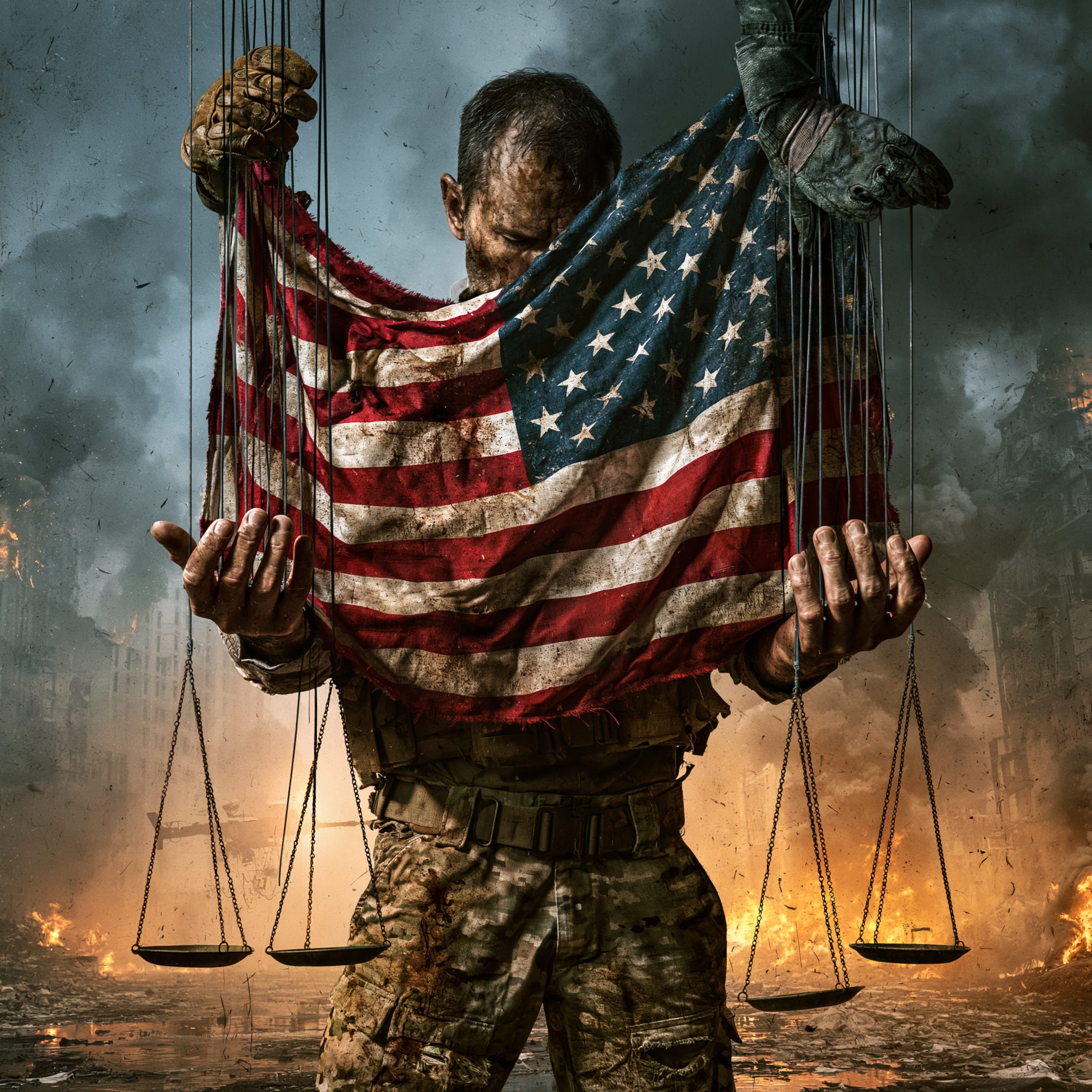
Prechter developed his ideas in a world radically different from ours.
Social mood might move markets and politics, but influencing millions of individual minds was expensive, slow and crude. Governments had newspapers, radio, television, posters and propaganda. They could broadcast.
Today they can target.
They can experiment.
They can measure.
They can amplify.
They can create thousands of apparently independent voices, identify existing divisions, test which messages produce the strongest reactions and distribute those messages through systems whose algorithms are specifically designed to maximize engagement.
And anger engages wonderfully.
Foreign attempts to influence American public opinion aren’t hypothetical. Russia, China, Iran and others have all been accused—with substantial evidence in documented cases—of information operations designed to exploit political and social divisions inside the United States.
But we should be careful here.
It is comforting to imagine that some foreign intelligence service created our problems. That conveniently makes us innocent.
They didn’t.
Housing really is unaffordable for many people. Institutions really have failed. Corporations sometimes exploit regulatory systems. Governments waste money. Politicians lie. Journalists make mistakes and sometimes worse. Wealth can purchase influence. Markets can become distorted. Americans have plenty of legitimate grievances without Vladimir Putin inventing any for us.
That’s precisely what makes the vulnerability so powerful.
You don’t have to create the crack. You just have to hammer the wedge.
Imagine the strategic implications.
You don’t need to convince Americans that Russia is better.
You don’t need to persuade them that China has designed a superior civilization.
You don’t even need them to agree about what should replace their existing system.
You merely need enough Americans to conclude that their own system is illegitimate.
Markets are rigged.
Elections are rigged.
The media lies.
The courts are corrupt.
The rich cheated.
The poor are freeloaders.
Immigrants stole your future.
Corporations own the government.
Government wants to control you.
Your political opponent isn’t mistaken. He’s evil.
Your neighbor isn’t someone with whom you disagree. She’s the enemy.
Keep turning those knobs and something remarkable happens.
People stop trying to win the game.
They start trying to make sure the other guy loses.
That’s the Russian card game again.
And maybe that’s why Nation’s Dumbest hit me strangely. Not because a goofy television show predicts the collapse of Western civilization. Sometimes a game show is just a game show.
But culture occasionally gives us little mirrors.
Forty years ago, I heard a story about someone who couldn’t quite understand why gasoline sitting in front of him could be worth more than gasoline unavailable at an official price.
I thought he didn’t understand markets.
Maybe the deeper issue was that he trusted a different scoreboard.
Civilizations run on those invisible scoreboards.
Money works because we collectively accept that it has value. Markets work because enough participants believe prices contain useful information. Courts work because people generally accept decisions they hate. Elections work because the losing side ordinarily accepts that it lost. Entrepreneurship works because extraordinary rewards justify extraordinary risks. Democracy works because when the election is over, the people who voted against you remain fellow citizens.
None of those things are laws of physics.
They are social technologies.
And social technologies can be attacked.
That might be the piece Prechter couldn’t have anticipated. If social mood helps create political and economic reality, then in an interconnected world social mood isn’t merely something to measure.
It is something worth manipulating.
The most effective attack on America may not require destroying its factories, sinking its aircraft carriers or defeating its technology.
It might be far cheaper.
Convince enough people that the winners cheated.
Convince the losers that losing proves the rules were unfair.
Convince everyone that institutions deserve no trust.
Then wait.
Eventually nobody cares much about winning the game.
They just desperately want to make sure the other guy loses.
And once that happens, you don’t even have to fake the scoreboard.
You only have to convince everyone else that it’s fake.
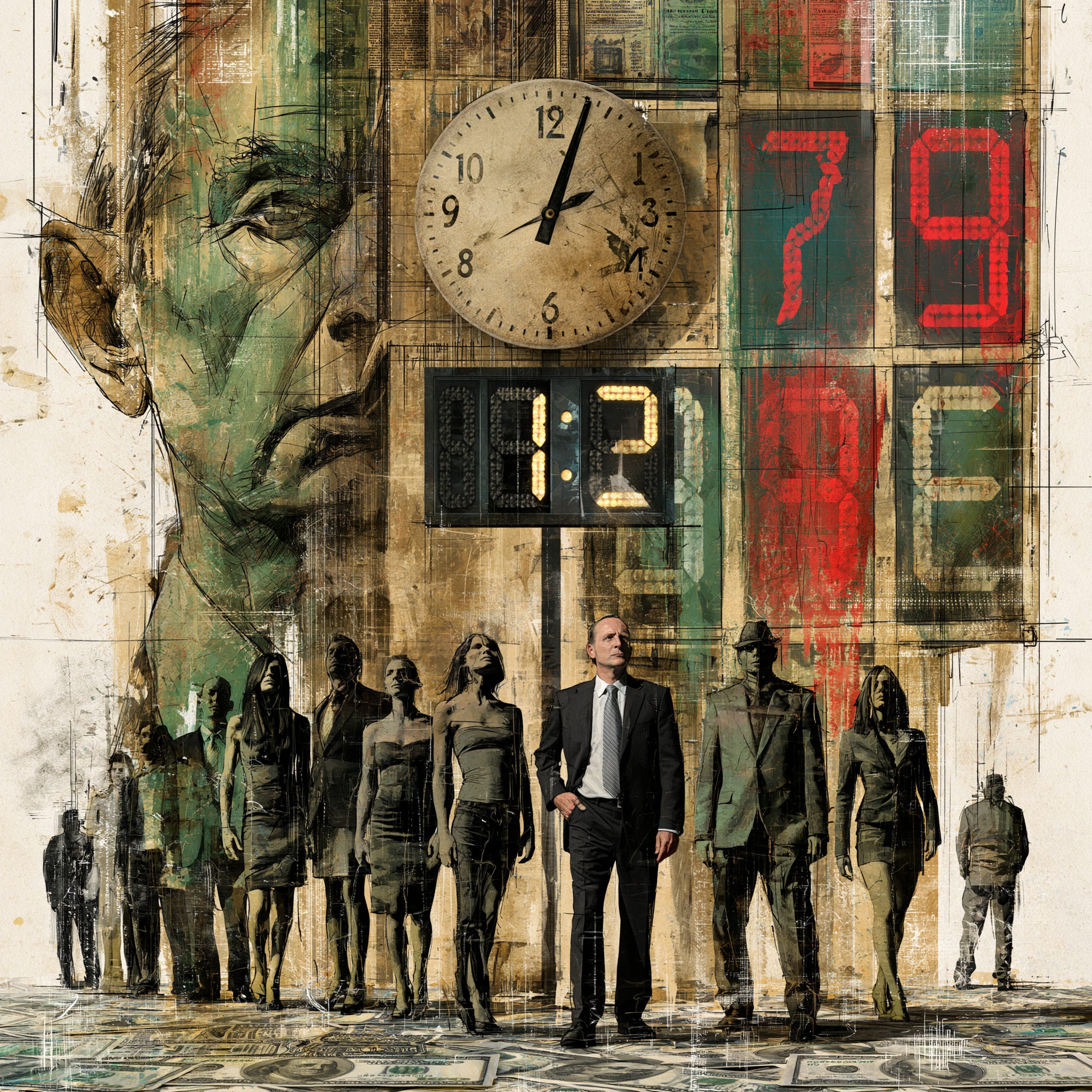
🌱 Seed Thought: A civilization doesn’t have to lose the game to lose what made it successful. Sometimes it only has to stop believing in the scoreboard.
