


Joe once floated the idea of an interview with me. The focus was clear: talk to someone who had successfully sold a successful business and unpack what actually mattered along the way. The questions were drafted, the direction was there—but the conversation itself never made it to the stage.
It lingered anyway, like a line of code that never executes but still shapes the program.
Some of those questions stuck with me. Not because they were clever, but because they were honest. They were the kind of questions that don’t just look for answers—they expose how you think about what happened after enough time has passed to see it clearly.
This series of posts is built from those questions.
The first one sounds simple enough: “How did you get into business, and what were the results?” But like most worthwhile questions, the real answer doesn’t begin where the question does.
Before Business, There Was Curiosity
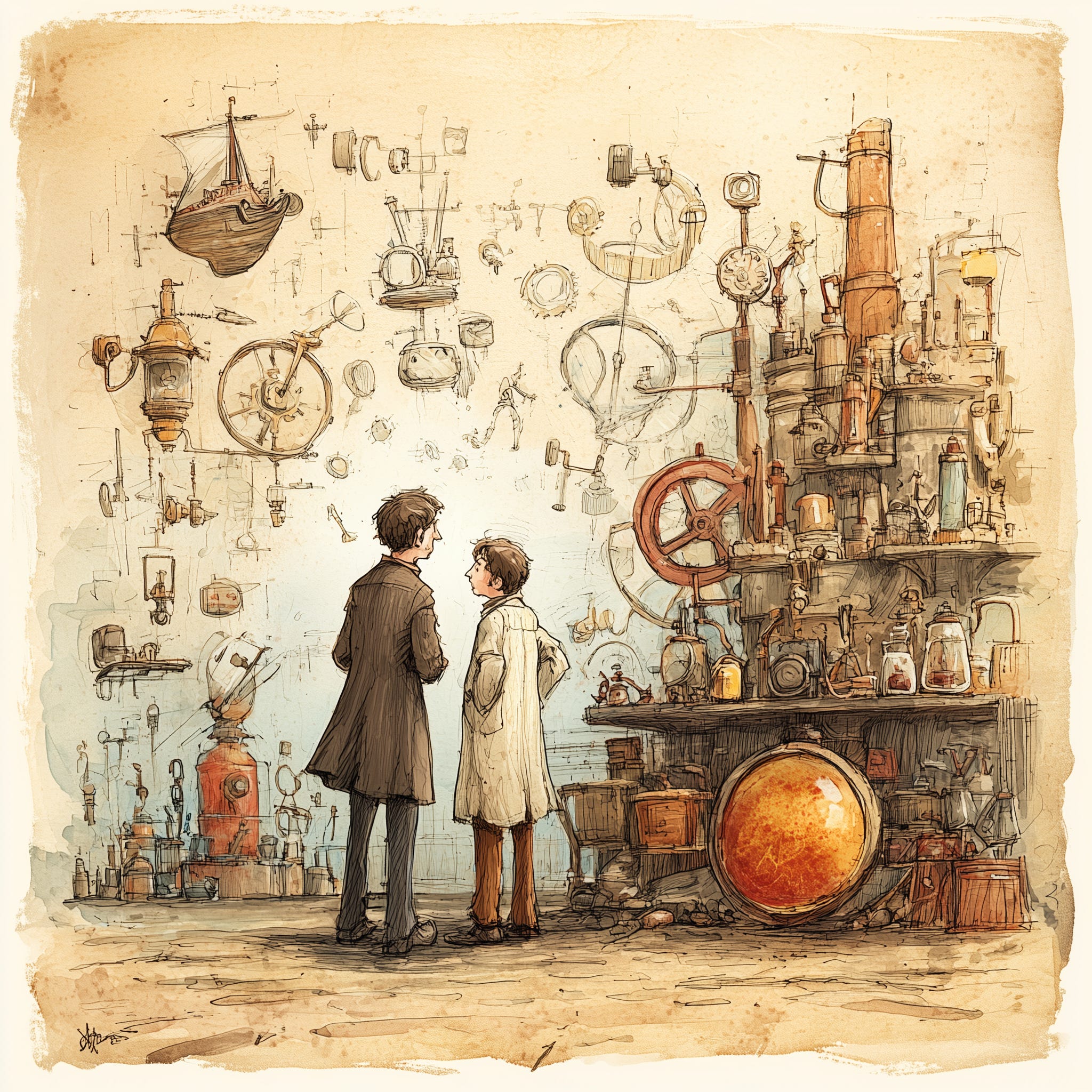
I didn’t set out to get into business. I went to MIT to study Electrical Engineering because I liked building things. That was the starting point. No grand strategy. No carefully polished five-year plan. Just curiosity, hardware, and the satisfaction of making something work that did not exist before. My early fascination was fed by Heathkit kits and by the kind of tinkering that makes a person ignore the label that says there are no user-serviceable parts inside.
When the acceptance letter from MIT arrived, my reaction was basically: okay, I guess that’s the place to go. Back in the 80s, that was how decisions like this often worked. There were no websites to comb through, no online videos, no social platforms pretending to be guidance counselors. You had books, letters, maybe a campus visit, and your own instincts. So I dove in.
I still remember 8.012, the freshman physics class for people who “liked math.” On the first day—yes, the first day—there was a test just to see where everyone stood. It felt less like a warm welcome and more like being dropped into the trenches with your classmates and told to survive together. By the time the final exam arrived, the difficulty had gone from intimidating to nearly theatrical. A lot of us wrote F = MA in hopes of getting at least one point for identifying one of the equations we might need to solve a problem that felt nearly unsolvable. Thank God for pass/fail in freshman year.
As brutal as that sounds, I loved MIT. More so when it was over than while I was in the middle of it, which may be the most honest MIT sentence possible. The education was extraordinary. On most, if not all, exams, you could bring your books, calculators, and notes. The point was not memorization. The point was application. The point was solving problems you had never seen before. I hope it still works that way. Whether or not that directly answers Joe’s question, it absolutely shaped who I became. You cannot separate that training from the person I later turned into.
The First Business I Didn’t Realize Was a Business
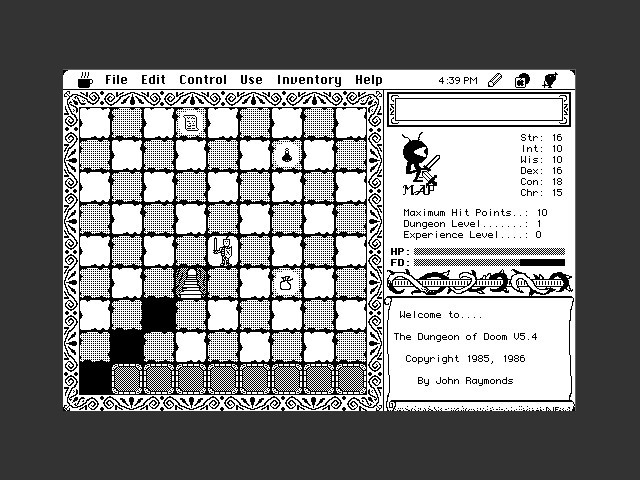
If you really want to trace the business thread, it probably starts with the fact that I taught myself C while I was at MIT. At the time, Megamax C had been released for the Macintosh. It was one of the earliest C development systems for that machine, and it came bundled with the source code to Megaroids, written by Mike Bunnell, as an example of what the system could do. That mattered. Inspiration often arrives wearing the costume of an example file.
That was what pushed me to write a casual graphical game for the original Macintosh called The Dungeon of Doom. It was inspired by Rogue on Unix, but I wanted to take that idea out of its existing environment and turn it into something ordinary people could simply enjoy. Not admire. Not academically respect. Enjoy.
It became a surprisingly large success in the Shareware world at the time. It appeared in magazines. I received notes from all over the world in the mail, which in the pre-internet era felt almost magical. Imagine that now: a thing you built on your machine somehow finding its way into homes and hands you would never see, then a letter arriving to prove it. It generated money too. Not enough to live on, but certainly not enough to sneeze at either.
So yes, I suppose I was in business. I just never really thought about making a company out of it. That distinction matters. Sometimes you are doing the thing long before you have the language to describe what you are doing.
After MIT, I took two years to decompress and to see whether writing code was something I wanted to explore further. I wrote a few things outside the gaming world, but nothing reached the same level of visibility or success. There was a company interested in hiring me for my programming skills, but for reasons I could not fully explain at the time, something deep inside me was not terribly excited by that path. It was not logic. It was not analysis. It was just one of those early inner signals that says, not this.
A quick aside: Forty years ago, on the original 128K Macintosh with its single 400-kilobyte floppy disk, the first version of The Dungeon of Doom was written and run using Megamax C. That entire world—operating system, compiler, the game, and all save files—had to fit on one small floppy that held less data than a single modern smartphone photo does today. The Mac had only 128 kilobytes of memory; today’s phones have around 8 to 16 gigabytes, roughly 65,000 times more. Its processor ran at about 0.7 million instructions per second, while a current phone’s chip is tens of thousands of times faster. In fact, the computational work required to take and process one everyday phone photo—using advanced AI and multiple image layers—often exceeds the total computing power the Macintosh used to run the entire game from start to finish. What once filled an entire digital universe now fits in the space and effort of a casual snapshot.
The Business I Never Expected

In the background of all of that was the family plastic packaging business. On the surface, it had almost nothing to do with electrical engineering. But despite all my shortcomings at the time, I seemed to have at least enough self-awareness to know that what burned inside me was not tied to a specific industry. It was tied to the desire to make things better than they were.
To some degree, that is what I had done with The Dungeon of Doom. I took an idea I admired and made it more accessible, more usable, more enjoyable. The family business was different. It was not a piece of software or a side project. It was a beast, and I had no practical understanding of how to tame it.
What made all the difference, looking back, was not that my father mentored me directly. He didn’t, at least not in the usual sense. What he did do was have me spend time in different parts of the business. Yes, I was in the Information Technology department, or whatever it was called back then, but I also spent time in sales, on the factory floor, working on machines, getting my hands dirty. Without realizing it, I was being taught to see the whole organism instead of just my corner of it.
And I started to see it. The good and the bad. The success and the frustration. The visible machinery and the invisible drag. I began to understand that this was something that needed to be made better.
I don’t think I fully understood the word needed until I spent time in the Finance Department. That was where I saw that finding enough cash to get through to tomorrow seemed to be the ongoing focus. It changes your view of a business when you realize that survival is sitting quietly underneath the official story.
At the same time, I heard people talk about the company’s history, especially the history of its success. Those stories were real. They mattered. But nobody was speaking with the same brutal honesty about how we had arrived at the problems we now had. They were not ignoring the problems entirely. That would be too easy an accusation. It was more subtle than that. They had the blinders of success on and could not see beyond them.
That is one of the more dangerous side effects of having once done well. Past success can become a form of camouflage.
When the Learning Really Began

Then my father passed away, and I became responsible for the end result. In that moment, the only thing I knew for sure was that we had to do something different. Not eventually. Not theoretically. But now.
That was when the real learning began.
As aware as I was that I wanted to make things better, I also knew something else just as important: I was not an operator. I was not the person who should be running every function of the business day to day. I wanted to work with the people who could make that happen. I just needed to find them.
That may sound obvious now, but self-awareness is often expensive. Plenty of people spend decades and a great deal of collateral damage trying to become the wrong version of themselves.
Through grace and faith, I found the people I needed to find, and the rest is history. That phrase can sound a little too neat for a life that never actually feels neat while you are living it, but it is still true. What came after shaped everything. It made me who I am today.
Still learning every day. Still solving problems. Still wanting to make things better.
🌱 Seed Thought: Maybe that is the real answer to Joe’s question. I did not get into business because I dreamed of being “in business.” I got into it because I kept following the friction. I kept noticing what was broken, what could be improved, what wanted to be made better. MIT sharpened the way I thought. The Dungeon of Doom showed me that something built with care could travel far beyond me. The family business forced me to confront reality, responsibility, and the difference between wanting improvement and being capable of leading it into existence.
Business, in the end, was never the headline. It was the arena where all of those parts of me met.
