


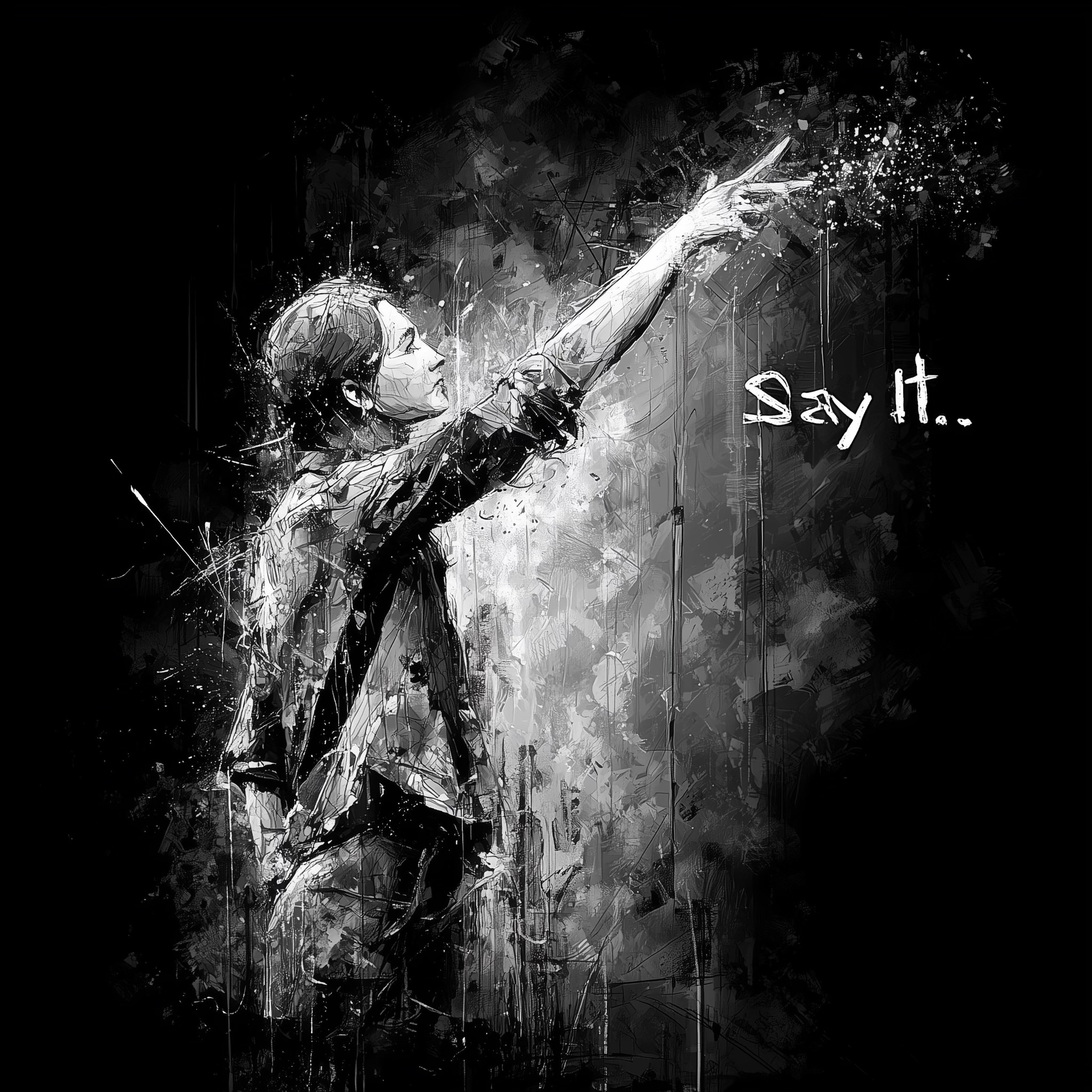
Say It. Mean It. Do It.
On that private plane headed from St. Louis to Manchester, NH, Joe Polish asked a question that sounds simple until you try to answer it honestly:
How would you define entrepreneurial success? What are you actually pursuing? Where does the ambition come from? If someone said, “This is successful,” what would that mean to you?
At the time, my answer was surprisingly basic.
Success, in my view, had little to do with money, status, connections, or credentials. It boiled down to something more fundamental: using your language — internally and externally — in a powerful and meaningful way by doing whatever comes out of your mouth.
Say it.
Mean it.
Do it.
Make sure the words you speak publicly are congruent with the thoughts you allow privately. If they aren’t, the only person you will ever succeed in fooling is yourself.
Decisiveness becomes the prerequisite. Clarity becomes the discipline. If you lack actionable thought, how can you possibly follow through on what you declare? It sounds simple, almost elementary, but in practice it separates you from the overwhelming majority of people. When turned into culture inside a business, it becomes a quiet competitive advantage — less talk, more done.
Back then I gave an example. Someone I met declared — to the giggles of the people around them — that they were going to sign up to be an Uber driver to earn extra income. Within a week, they were fully qualified. Shortly after, they were driving.
Halfway to success was the declaration. The rest was execution.
The giggles didn’t matter.
Or so I thought.
The Cost No One Sees

If I were answering Joe’s question today, I would add something I hadn’t yet fully internalized. The Uber story captures congruence. It doesn’t capture cost.
Years ago I was at SpaceX, and someone asked Elon Musk what the secret to being a successful entrepreneur was. He paused for a few seconds and said, “A high tolerance for pain.” At the time, Tesla and SolarCity were facing potential bankruptcy. Falcon 1 had failed three times. He had to decide whether to put the rest of his own money into a fourth launch attempt. He was going through a divorce.
That is not the Instagram version of entrepreneurship. That is not the keynote highlight reel. That is pain.
And that pain is not an anomaly.
It is part of the job description.
That pain is not theoretical to me.
I’ve faced failure inside a family business. Navigated divorce while carrying the weight of responsibility. Signed personal guarantees that exceeded my net worth. Fired someone nearly thirty years my senior and watched them cry — and no, that was far from fun. Invested too heavily in ideas that felt brilliant at the time. Watched ventures collapse. Even saw a major business fail after it had already become what most would call an amazing success.
None of that shows up in the highlight reel either.
I’ve seen a version of this pattern elsewhere. Watch Billy Bob Thornton as Tommy Norris in Landman or Billy Crudup as Cory Ellison in The Morning Show. Strip away their flaws, the drama and what you find is a common thread: they absorb volatility so others can perform. They take the hits so the machine keeps running.
I saw something similar while involved, ironically, in a film production company. No one ever formally explained to me that shielding chaos was a core responsibility of leadership. In fact, I’m not sure it would have been described that way internally at all. I noticed it from the outside. Vendors failed to deliver. Promises from outside parties wobbled. Unexpected curveballs threatened to shut down a day of shooting. Yet the cast showed up, hit their marks, and went home focused on their craft.
And I remember thinking: if the cast and crew had to carry all of that uncertainty home with them every night, some of them might never have signed up in the first place.
Someone had to absorb that risk.
It’s like being a goalie — except your team isn’t in front of you protecting the net. They’re behind you. You’re protecting them from what’s flying toward the goal. You make split-second decisions with incomplete information. You stand in the line of fire so the rest of the team can keep playing.
No one applauds the disasters that never happen.
That’s not a role for the faint of heart.
Why It’s Rare — And Why It’s Worth It

So today, I would refine my original answer this way:
Entrepreneurial success is the disciplined habit of doing what you say you will do — combined with the psychological stamina to endure what that commitment costs you.
The Uber driver endured giggles. The founder endures sleepless nights. The leader endures blame. The producer absorbs chaos. The CEO carries uncertainty no one else is allowed to see.
And here’s the part that makes it difficult: if it were easy, everyone would be doing it.
Just like in sports, having what it takes does not guarantee you a championship. Talent matters. Work ethic matters. Pain tolerance matters. But so do timing, competition, randomness, and the occasional cruel bounce of the puck. You can do everything right and still lose.
Which is precisely why so few people sign up for the position.
But when you do win — when the impossible stacks on top of the improbable and somehow breaks your way — it feels so worthwhile you can’t imagine doing anything else with your life. The sleepless nights make sense. The risks feel justified. The shots you absorbed fade into the background.
Then, if you’re lucky, you do it again.
And with enough repetition, something even stranger happens.
You actually get good at it.
Not immune to pain — but better at carrying it. Not free from risk — but more capable of navigating it. You start to see the patterns in chaos. You anticipate the puck before it leaves the stick.
That’s when entrepreneurial success becomes less about proving something and more about becoming something.
The language still matters. Congruence still matters. Decisiveness still matters. But without tolerance for pain, the words eventually collapse under pressure.
If you can say it, do it, shield the team, and keep moving forward even when the outcome is uncertain — that is entrepreneurial success.
The scoreboard may or may not cooperate.
The courage to stand in front of the net is the real win.
🌱 Seed Thought: Success is not the absence of pain. It is the willingness to absorb it — long enough to give your team a chance to win.
