Somewhere Between St. Louis and Manchester
There’s something about planes that compress more than just legroom. Time compresses. Conversations compress. And occasionally—if you’re lucky—clarity does too.
On that flight from St. Louis to Manchester, New Hampshire, Joe Polish did what Joe does best. He turned a group of entrepreneurs into an impromptu experiment. Questions came out casually, almost playfully, but they had a way of sticking.
One of them sounded ridiculous on the surface: “What are your stupid human tricks?”
Not your résumé. Not your biggest win. Not your net worth. Your tricks. The things you do almost without thinking…
At the time, I gave three answers. Looking back now, more than a decade later, what’s interesting isn’t that they still hold up. It’s that they’ve quietly become more true.
Trick #1: Giving Without a Map
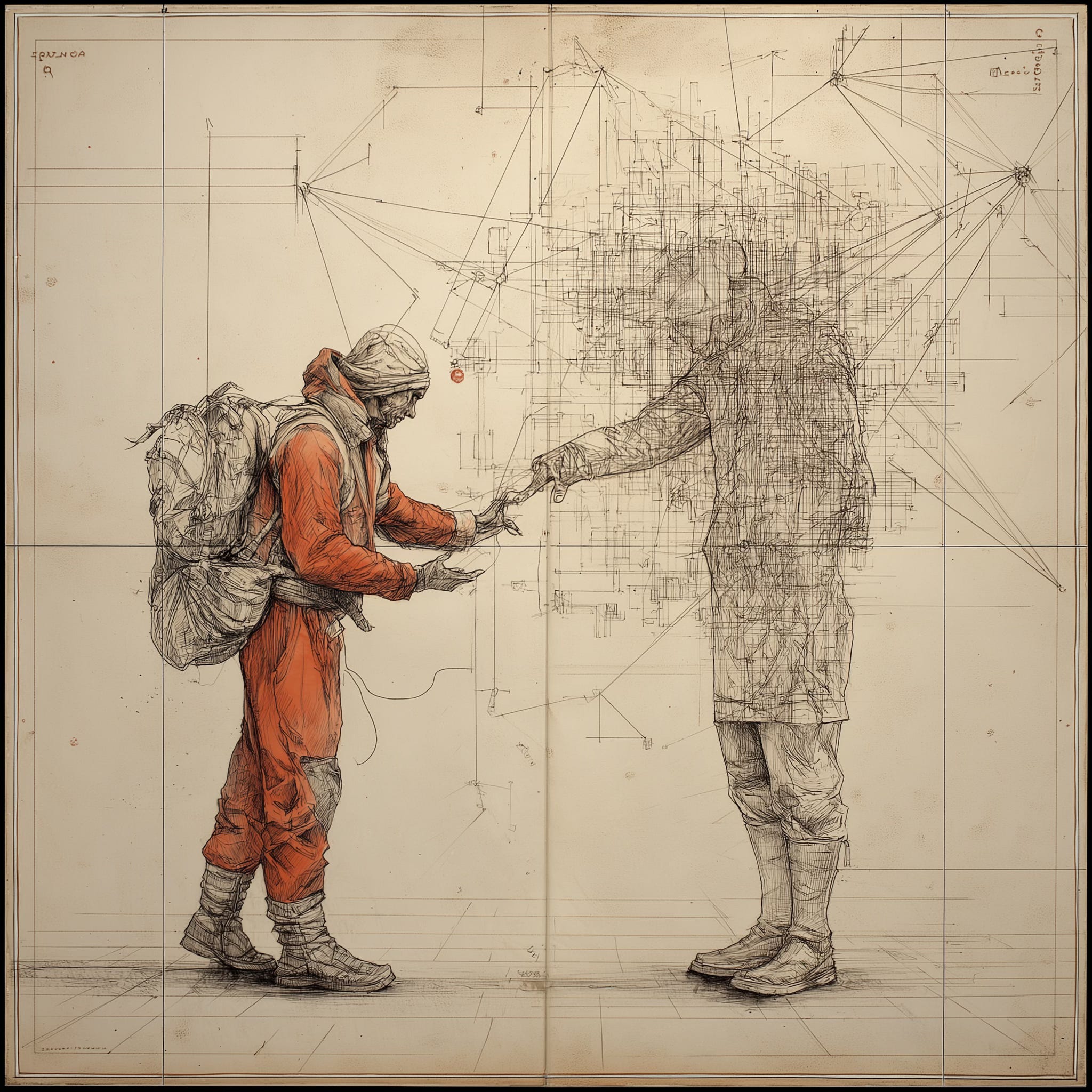
Before this sounds like a contradiction, it’s worth drawing a clean line back to something I just wrote about. Not all giving is the same.
I talked about giving with purpose—targeted, intentional, almost engineered. The MIT scholarship, for example, wasn’t random. It was deeply personal. It was about seeing something through. Supporting a path I understood. Extending a thread that had already shaped my life.
That kind of giving has direction. It has gravity. It knows exactly where it wants to land.
This is not that.
This is something else entirely.
This version of giving had a different internal driver for me: adventure. Not impact in the traditional sense. Not legacy. Not even return. Curiosity.
It showed up in strange ways—becoming a roadie for a day with The Who, training with the FDNY on Randall’s Island, sitting in rooms I had no business being in. Experiences that, on paper, made no sense as investments.
And yet, occasionally—without warning—they turned into something more.
A donation led to a lunch on the set of Stargate Atlantis. That moment turned into relationships. Those relationships turned into a company. That company became part of what was Bron Studios.
None of that was the goal going in. Not even close.
That’s the difference.
Giving with purpose is about seeing a future clearly enough to support it. Giving without a map is about stepping into a future you can’t yet see.
Both matter.
One builds what you already believe in. The other expands what you’re capable of believing in.
What I didn’t realize at the time is that this second kind of giving operates more like exploration than strategy. Small, intentional acts of generosity placed in high-energy environments with highly capable people—over long periods of time.
That’s not charity. That’s proximity.
And proximity, over time, becomes opportunity.
Today, the environments look different. A lot of the doors are digital. The access points are less obvious. But the underlying tension remains:
Do you fund the path you know… or step into the one you don’t?
The answer, at least for me, turned out to be both. Just not for the same reasons.
Trick #2: Lowering the Bar (on Purpose)

This one confused people then. It still does now.
Set the bar for success… low. Not in ambition—but in execution.
We live in an era of overwhelming input. Books, podcasts, conferences, feeds—all delivering what feels like life-changing insight on demand. The natural instinct is to take more. More notes. More ideas. More plans. And then… nothing happens.
What I learned—slowly—is that progress doesn’t come from collecting ideas. It comes from implementing one. Just one.
Take the best insight from a conference, a conversation, or even a failure—and make it real. Not perfectly. Not completely. Just concretely.
The compounding effect of this is almost invisible in the short term. But over years, it becomes staggering.
Looking back, I can now see something I didn’t fully appreciate at the time. When I first encountered this idea—likely somewhere around my early exposure to Tony Robbins—it wasn’t the insight that mattered. It was the restraint.
Choosing not to chase everything… so that something could actually stick.
In a world that increasingly rewards speed, this is a quiet rebellion.
And like most rebellions, it doesn’t look impressive while it’s happening.
Trick #3: Recording a Life (Before It Disappears)

The third one is the simplest to explain—and the hardest to sustain.
Write it down. Every day.
Not for publication. Not for performance. Not even for clarity. Just… record it.
What started as a suggestion eventually became a habit. And somewhere along the way, it became something else entirely: a mirror.
There’s a quote often attributed to Steve Jobs: “If today were the last day of my life, would I want to do what I am about to do today?”
It’s a powerful question. But the journal adds something else. It doesn’t just ask the question—it keeps the receipts.
Over time, patterns emerge. Not the big, cinematic ones. The small, repeating ones. What you say you value. What you actually do. Where those two diverge—and how often.
There’s another layer to this now that didn’t exist in the same way back then. We are recording everything. Photos. Videos. Voice. Data trails of every kind.
Joe made a comment on that flight about people listening to those conversations hundreds of years from now. At the time, it felt like a stretch.
Now? It feels conservative.
The irony is that while we are capturing more than ever… we are understanding less of it. Maybe AI will change that equation?
Recording a life isn’t about storage. It’s about reflection. It’s about training for the future.
Because without that, all we’re doing is building a undocumented blur of memory.
The Thread That Ties It Together

Looking back, these weren’t really “tricks.” They were filters—ways of interacting with the world that quietly shaped what showed up next.
Give without needing a defined return.
Implement less, but actually do it.
Record enough to see what’s real.
None of them are complicated. All of them are easy to ignore.
And yet, over time, they seem to bend the trajectory of a life in ways that are hard to explain from the outside.
Which is probably why they showed up as answers to a question that to some could sound like a joke.
🌱 Seed Thought: Some giving builds the future you already believe in. Some giving reveals the one you didn’t know was waiting. The trick is knowing when you’re doing each—and why.