


The Man Who Doesn’t Lose Sleep
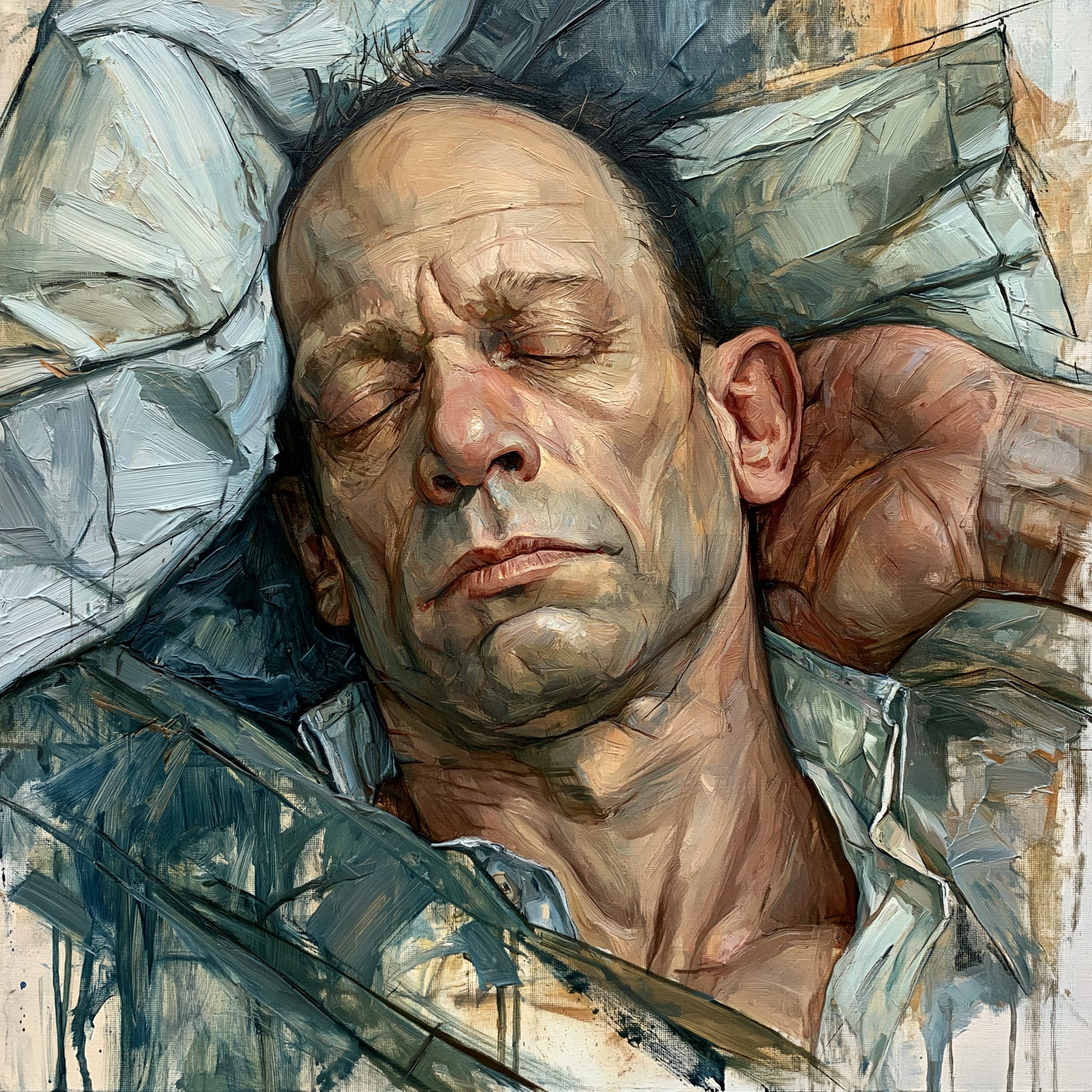
One of my personal heroes is a longtime friend who has built an extraordinarily successful business in one of the most challenging industries imaginable.
Margins are thin, competition is everywhere, customers are fickle, and employees can often walk across the street and find another job doing essentially the same thing. It’s an environment where even the best operators face a seemingly endless stream of problems, many of which are completely outside their control.
Yet somehow, my friend keeps moving forward. He has built a remarkable organization, retained people in an industry notorious for turnover, and navigated challenges that would make me want to hide under a rock. Through it all, he rarely seems rattled by whatever catastrophe has decided to introduce itself that morning.
I’ve known him for years, and I’ve always been fascinated by that ability.
During a recent conversation, I finally asked him about it. What did he do differently? What was it about the way he thought that allowed him to navigate situations that would overwhelm so many others?
One of the first things that emerged was his relationship with emotion.
He’s not an unemotional person. Far from it. He can get choked up over a story or something that touches him personally. But when a serious problem presents itself, something changes. Rather than becoming consumed by the emotion of the situation, his mind moves almost immediately toward finding a solution.
Later, after he had walked me through one particularly difficult chapter in his business career, I suggested that he seemed to thrive under adversity. His response was wonderfully simple.
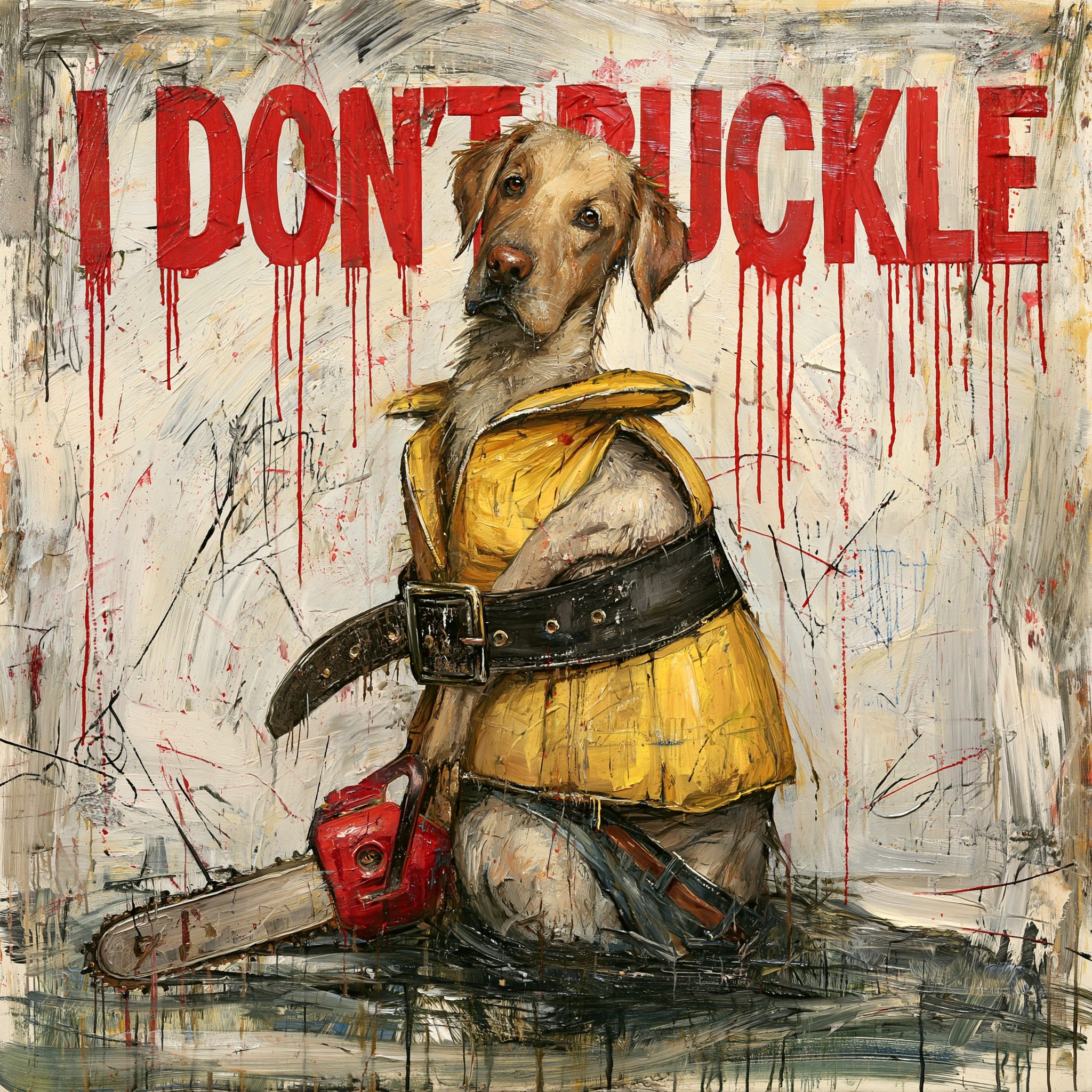
“I don’t buckle. I don’t lose sleep.”
Easy to say when everything is going well. A little harder when everything is falling apart.
When the Business Makes the Decision
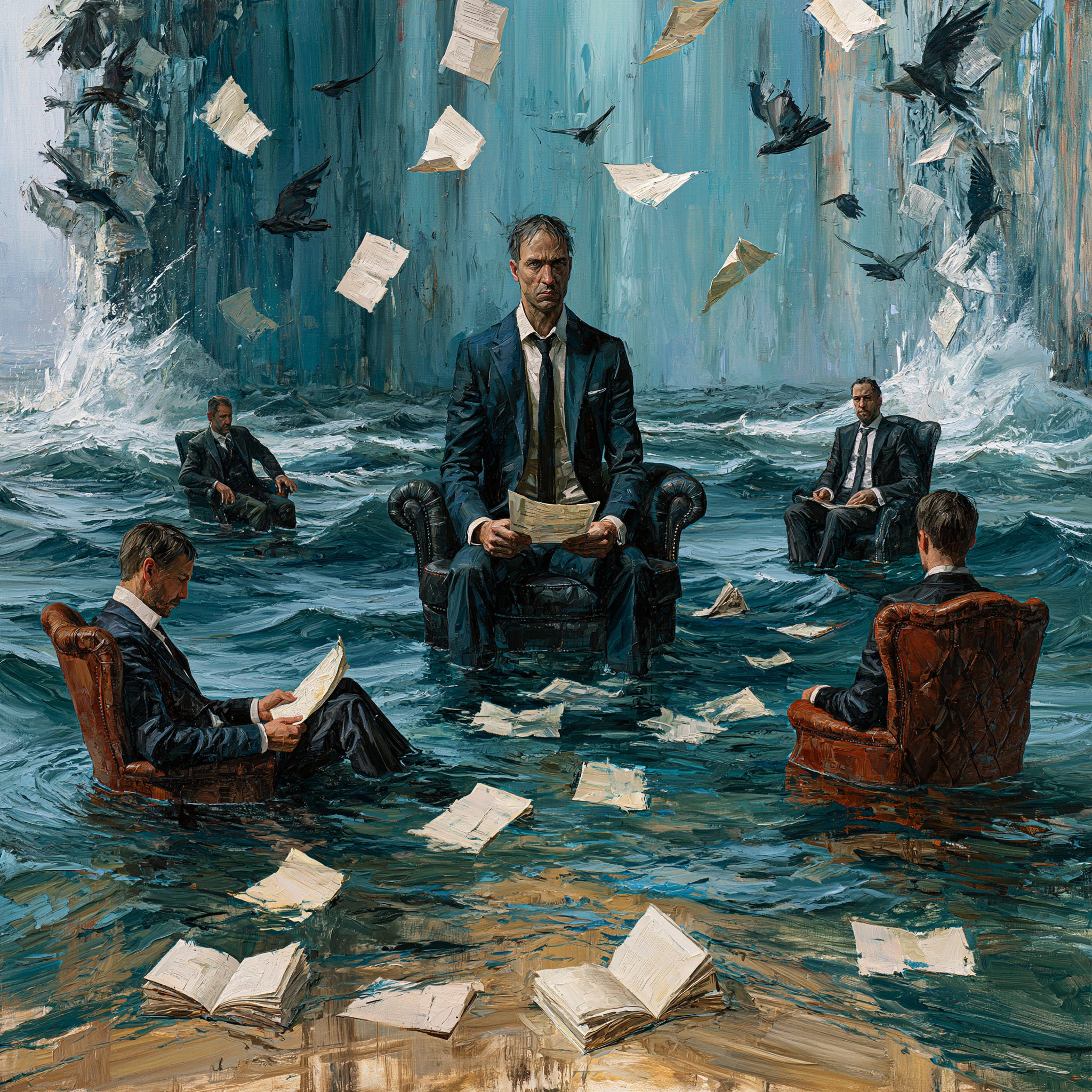
I’ve watched businesses struggle through difficult times. Some recovered. Others didn’t. And one pattern has always fascinated me.
Many business owners recognize they’re in trouble long before the situation becomes terminal. They see the shrinking margins, declining sales, increasing debt, or changing marketplace. They know something is wrong. They may even understand exactly what needs to change.
But they don’t make the change.
Not because they’re stupid. Not because they don’t care. Often, it’s quite the opposite. They’ve invested years of their lives in the business. Their employees depend on them. Their families depend on them. Their reputation is tied to what they’ve built.
Making the necessary changes might mean confronting lenders, renegotiating agreements, closing locations, selling assets, reducing expenses, or admitting that a strategy they believed in no longer works. Those decisions are painful. Worse, they introduce new risks into an already difficult situation.
So they keep going. They work harder. They put in more hours. They find another way to make payroll. They stretch another payment. Maybe they inject more personal capital. They tell themselves that if they can just get through the next few months, things will improve.
Sometimes they do.
But here’s the trap: Working harder at a failing strategy can feel exactly like doing the responsible thing.
The owner sees perseverance. Employees see commitment. Lenders may even see a business owner doing everything possible to honor obligations. What nobody wants to acknowledge is that the business may be consuming the very resources it needs to survive.
The options available six months earlier are slowly disappearing. Cash that could have funded a restructuring is gone. Assets that could have been sold strategically must now be liquidated. Relationships that might have supported a negotiated solution have deteriorated.
Eventually, the decision the owner refused to make gets made anyway. Only now, the owner isn’t making it.
The business makes the decision for them.
And by then, the only option left may be dissolution.
That’s the cruel irony. In trying to avoid the painful decisions that might have saved the business, the owner has allowed circumstances to make those decisions in the most painful way possible.
The difference between a turnaround and a liquidation isn’t always the quality of the business or even the severity of its problems. Sometimes it’s simply when someone decided to act.
When the Foundation Starts to Crack

My friend lived through something that illustrates this beautifully.
Earlier in his career, he had built a substantial business around a relationship with a much larger organization. He knew the industry, understood the economics, and had every reason to believe he was building something with a future.
Then the larger corporate world intervened.
Decisions made far outside his control began undermining the very foundation of the business he had built. The consequences weren’t limited to corporate headquarters. Independent operators had their own capital invested, employees depending on them, leases to honor, and financial obligations that didn’t disappear simply because someone else had decided to change direction.
For my friend, the situation became extraordinarily difficult.
Imagine building a successful business around a relationship you believe in, only to watch decisions outside your control undermine everything you’ve created. You could complain. You could fight corporate. You could tell yourself that somebody would eventually recognize the mistakes and reverse course.
He certainly wasn’t shy about fighting when fighting made sense. But he also recognized something much more important.
He couldn’t wait for someone else to save his business.
He brought his management team together and told them the truth. The business as they knew it didn’t have a future. He couldn’t promise that everything would continue as before, and he wasn’t going to pretend otherwise.
What he could promise was that he would do everything within his control to protect their opportunities as he worked through the crisis.
Then he went to work.
Rather than continuing to operate under assumptions that no longer held, he began challenging the financial and contractual structure surrounding the business. He confronted parties whose agreements had been written for a world that no longer existed. He brought in expertise, explored restructuring alternatives, negotiated difficult changes, and looked for opportunities to sell or transform parts of the operation.
None of this was comfortable. Some of it was confrontational. All of it involved risk. But doing nothing involved risk too.
And that’s where his approach differed from the business owners I’ve watched slowly run out of runway.
He wasn’t trying to preserve the appearance of a healthy business until the money ran out. He was trying to preserve the ability to create a healthy business on the other side.
There is an enormous difference between those two objectives.
While working through the problems with the existing business, he was simultaneously exploring opportunities with entirely new partners. He wasn’t waiting to finish solving one problem before beginning to solve the next. He was creating alternatives while he still had something to work with.
And eventually, those alternatives became the foundation of a much larger and more successful enterprise.
I asked him how he had managed to navigate all of this. His explanation was almost comically understated.
He developed a plan, worked the plan, and got lucky.
Then he added a thought that has probably launched a thousand motivational speeches:
“You work hard, you get lucky.”
But I think there’s considerably more happening here than hard work and luck.
The Difference Between Fighting and Surviving

One of the more dangerous ideas in business is that perseverance is always a virtue.
We’ve romanticized the entrepreneur who refuses to quit. The founder who works through the night. The business owner who mortgages everything to keep the doors open. The person who believes so deeply in the mission that surrender is unthinkable.
And sometimes those stories have wonderful endings. But we hear disproportionately from the survivors.
For every celebrated entrepreneur who bet everything and won, how many others made exactly the same bet and lost? Their stories rarely make the conference stage.
This doesn’t mean we should be timid. Quite the opposite. It means we need to distinguish between two very different kinds of perseverance.
Perseverance toward an objective and perseverance with a strategy are not the same thing.
My friend was determined to survive and build a successful business. He wasn’t determined to preserve the existing business model at any cost. He could abandon the strategy without abandoning the objective.
That distinction sounds obvious until you’re the one who has spent years building the strategy.
There’s a reason the sunk cost fallacy is so powerful. We tend to think of it in financial terms. We’ve invested so much money in something that we can’t bring ourselves to walk away, even when the future prospects no longer justify continuing.
But the financial investment may be the least important part of the equation.
You built something. You worked nights and weekends. You sacrificed opportunities, made commitments, convinced others to believe in your vision, and built an entire organization around making it happen.
You don’t simply want it to work.
You NEED it to work.
And that need can become an extraordinarily effective filter against reality.
I know something about that.
Years ago, while running our family’s rigid plastic packaging business, Captive Plastics, I had my own wake-up call. I’ve written about it before in Navigating Uncertainty: The Leadership Paradox of Choice and Confidence, but the moment that sticks with me was a question from my COO:
“Why are you the CEO, and I am the COO?”
It’s an uncomfortable question to be asked when you’re the CEO. It was also exactly the kind of question I needed to confront. It forced me to reconsider my role and how I was approaching the business rather than simply continuing with the arrangements and assumptions already in place.
Looking back, I wonder whether I had an advantage that I didn’t fully appreciate at the time.
I was the second generation of ownership. The business was my father’s legacy, and that certainly carried its own emotional weight. But much of what had been built before I took over wasn’t something I had personally created from scratch.
Perhaps that made it a little easier for me to question it. Not easy. Just easier.
I wasn’t defending every decision because it was my decision. I wasn’t trying to prove that every investment or strategy made before me had been right. I had the opportunity, and ultimately the responsibility, to decide what would make the business successful going forward.
That’s a freedom that founders, in particular, may find extraordinarily difficult to give themselves.
And it brings to mind an interesting parallel from a completely different world.
Writing.
Successful writers understand something that business owners often struggle to accept. You can spend months working on a manuscript, investing enormous amounts of time and creative energy, only to discover that it doesn’t work.
I know the feeling. I once had a Seed Scapes piece written, polished, and even scheduled for publication before realizing it wasn’t working. I scrapped the draft and approached the subject from an entirely different direction. All that work, and I was back at the beginning. Or was I?
Maybe the story is wrong. Maybe the characters don’t come together. Maybe the entire structure needs to be torn apart and rebuilt.
A writer who falls victim to the sunk cost fallacy tries desperately to save what has already been written. They rearrange paragraphs, change a few words, and polish sentences that probably shouldn’t exist in the first place.
A better writer recognizes that the work itself may have to go.
But here’s the important part.
The work wasn’t wasted.
Writing those pages taught the author something. Perhaps it revealed what the story was really about. Perhaps it exposed a flaw in the original idea. Maybe the characters only became interesting after the author had written enough bad pages to understand who they really were.
The pages may end up in the trash, but the understanding doesn’t. The next version can be substantially better precisely because the first version failed.
Business isn’t so different.
A strategy that didn’t work may have taught you more about your customers, your market, your employees, and your own capabilities than a successful one ever could.
The mistake is believing that preserving the value of those lessons requires preserving the strategy that produced them. Sometimes the only way to realize the value of everything you’ve invested is to stop investing in the thing itself.
That doesn’t mean every struggling business should be abandoned or every strategy rewritten at the first sign of trouble. There are plenty of circumstances where perseverance is exactly what’s required.
The challenge is distinguishing between a strategy that needs more time and one that needs to be replaced.
And perhaps that’s where my friend’s story becomes particularly instructive.
He didn’t eliminate risk by making those hard decisions. Renegotiating obligations, challenging established arrangements, and pursuing entirely new business relationships created plenty of new risks.
But those were risks he could evaluate and influence.
Continuing to pour resources into a deteriorating business while hoping circumstances would improve was a different kind of risk. It was increasingly outside his control.
He was exchanging the risk of passive deterioration for the risk of deliberate action.
That doesn’t guarantee a successful outcome. It does give you a chance to influence one.
I Don’t Buckle
There is one final distinction worth making.
When my friend says he doesn’t buckle, I don’t think that means he never experiences fear, uncertainty, or frustration. His description of himself suggests otherwise.
Nor does it mean that every decision he made was necessarily right. He freely acknowledges the role luck played in his success.
What strikes me is that he doesn’t seem to allow the emotional weight of a problem to prevent him from confronting it.
That’s an ability I admire enormously. But I also think there’s a lesson here that doesn’t require possessing his particular temperament.
Most of us can’t simply decide to stop feeling anxiety about a problem. We can’t flip a switch and become someone who sleeps soundly while the business is burning around us.
What we can do is recognize that being uncomfortable with a decision doesn’t make postponing it safer.
In fact, the opposite may be true.
The longer we wait, the fewer choices we may have. The options become more expensive, the consequences more severe, and the freedom to maneuver smaller.
There is a point in nearly every serious business crisis where the range of possible solutions begins to collapse. It doesn’t necessarily announce itself. There may be no dramatic event that marks the transition.
One day, the owner can still choose among several difficult paths. Some time later, those paths are gone.
And the business chooses the remaining one.
The challenge isn’t simply having the courage to make hard decisions. It’s recognizing that the time to make them is often when you still have enough resources, relationships, and credibility that making them feels optional.
That’s what I see when I look at my friend’s career.
Not a man who never encountered problems. Not someone who possessed a magical ability to predict the future. And certainly not someone who was successful because everything happened to work out.
I see someone who understood that survival sometimes requires taking actions other people are unwilling to take while those actions can still make a difference.
And perhaps that’s the most interesting part of his seemingly simple statement.
“I don’t buckle” doesn’t mean refusing to bend.
Sometimes it means having the judgment to bend everything except what truly matters.
🌱 Seed Thought: The hardest decisions are rarely the ones forced upon us. They’re the ones we must make while we still have the freedom to choose otherwise.
